Soft Filipino Pandesal
A light, fluffy, and slightly sweet classic Filipino breakfast roll perfect for breakfast, merienda, or dipping in coffee and hot chocolate. A beginner friendly recipe for Filipino Bakery!
by hungrycuriouskat
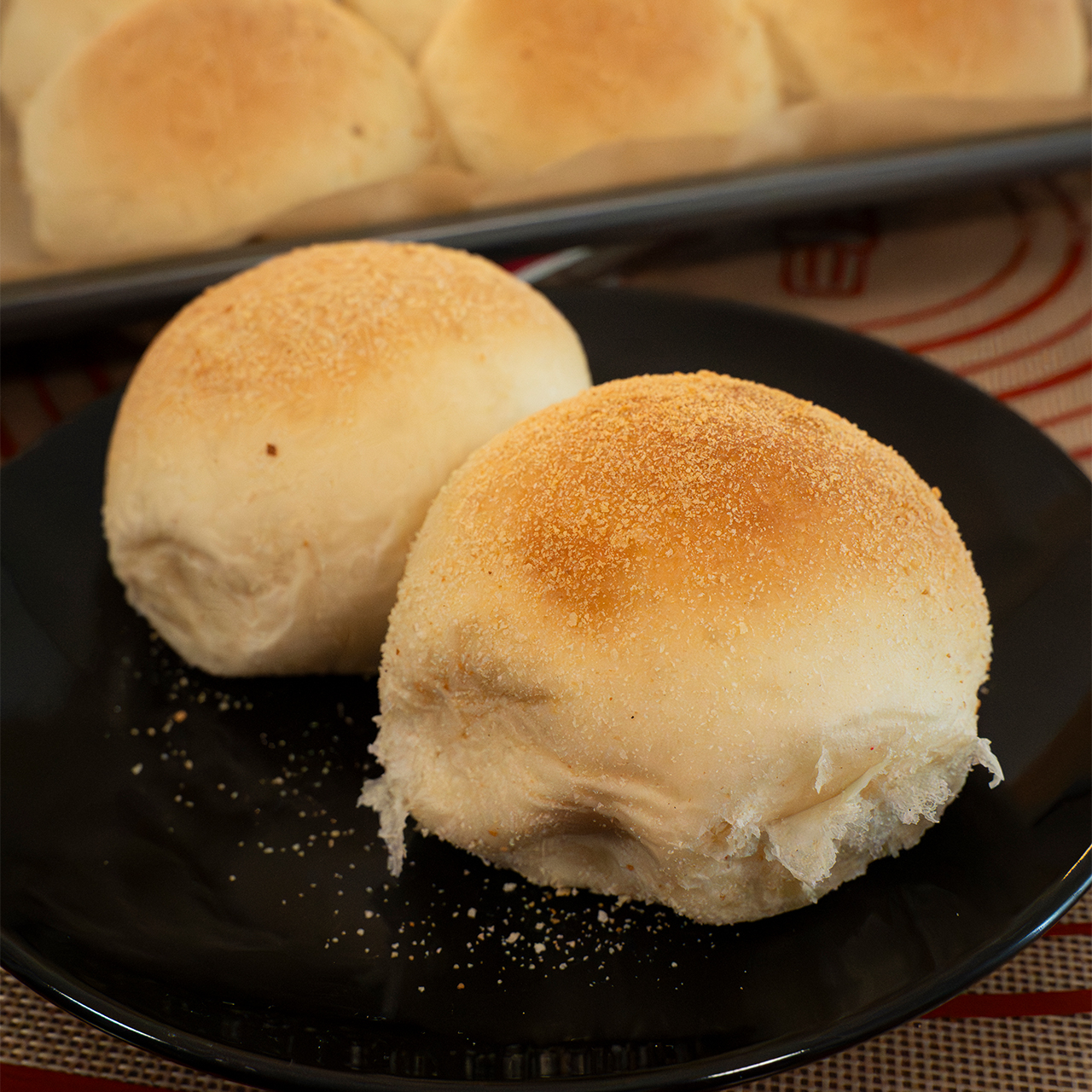
Soft Filipino Pandesal Recipe
Love at First Bite
Some people wake up to the crowing of a rooster. If you’re bougie, maybe it’s an alarm clock. I, on the other hand, wake up to two things in the morning: kuya manong outside the house shouting “tahooo!” or “pandesaaal!” – both of which are music to my ears. Here, I’ll show you how to make the latter. Filipinos love their carbs and Pandesal has always been a breakfast staple, whether or not you’re also having rice. My grandma used to joke that rice is for breakfast and Pandesal is for dessert. That’s how much we love this bread.
This is essentially the first bread you’ll learn to love from the panaderya. It’s soft and light, yet slightly dense because it’s meant to keep you full throughout the morning. The dough itself is a bit sticky, so it’s coated with breadcrumbs during the second proofing. My favourite thing about this bread is the lightly toasted exterior. It adds a bit of texture with every bite.
Today, there are so many variations of Pandesal. We have ube and cheese, malunggay, and more. But the classic will always taste like home to me. When I moved out of the Philippines, I knew this was the bread I had to learn to make, so that even when I feel homesick, I’ll always have something to remind me of home.
I hope this recipe gives you the same experience.
Breaking down the recipe:
What is Pandesal?
Pandesal is a classic Filipino bread roll. The name pan de sal is actually Spanish for “salt bread,” but contrary to the translation, it’s slightly sweet. Many of the breads and pastries in the Philippines were influenced by Spanish colonization, but they’ve since evolved to incorporate locally available ingredients. A distinct feature of Pandesal is the coating of breadcrumbs, which fall like sand with every bite. While it’s commonly eaten for breakfast, many Filipinos also enjoy it as a merienda. It’s best paired with hot coffee or hot chocolate for the kids (and me).
Instant Yeast VS Active Dry Yeast
Yeast is commonly used as a leavening agent in bread. These little buggers are the reason your dough rises after a bit of rest (they’re kind of like us). Both instant yeast and active dry yeast work for most recipes, but there are a few things to keep in mind. Instant yeast can be mixed directly with your dry ingredients and activates more quickly, while active dry yeast needs to be bloomed first before use. To do this, mix it with lukewarm milk and a bit of sugar, then let it sit for about 10 minutes until it becomes foamy – at that point, your yeast is activated.
In this recipe, we’ll be using instant yeast so there’s one less thing to think about, allowing us to focus on kneading the dough – the second most important part of making bread.
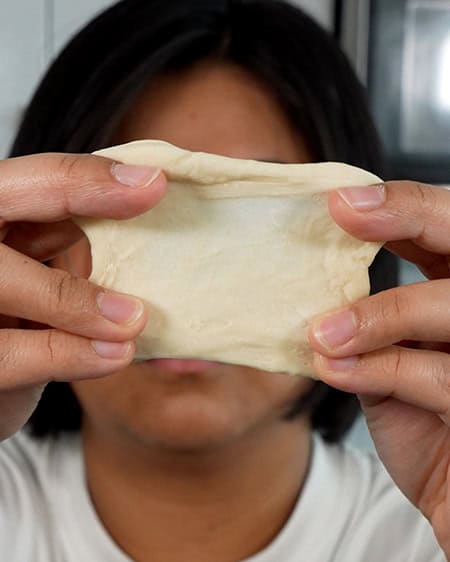
Dough Check: Windowpane Test
It’s important to develop gluten when kneading your dough because it helps make your bread airy instead of too dense. It also allows the dough to expand properly during baking instead of going flat. My favourite way to check if the gluten is fully developed is through the windowpane test. This is when you take a piece of dough and gently stretch it with your fingers until it becomes thin like a sheet. If it stretches without tearing and light can pass through it, it means your dough is golden and you stop kneading. But if it’s still breaks when you stretch it, then your dough needs more love and kneading.
Instructions:
*Detailed instructions and tips available in the recipe card below.
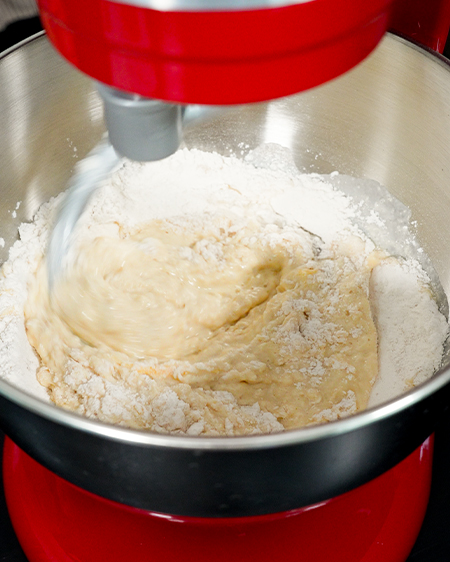
Mix all your ingredients in a bowl, EXCEPT for the butter:
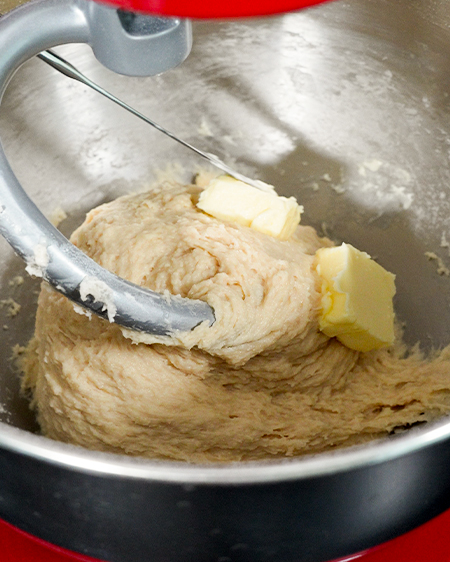
Once a rough dough has formed, you can add the butter and knead it into the dough.
Let your dough rest in a greased bowl for 1 hour, or until it has doubled in size.
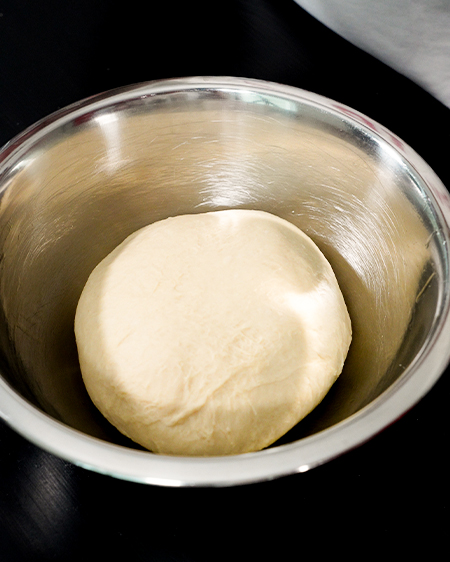
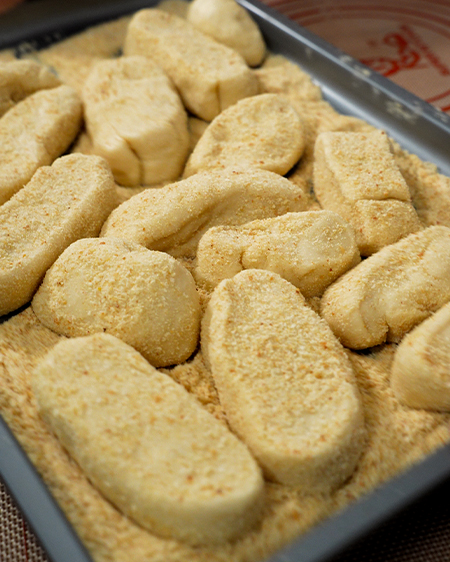
Divide your dough and shape it into small balls. Coat them with breadcrumbs, then let them rest for another hour.
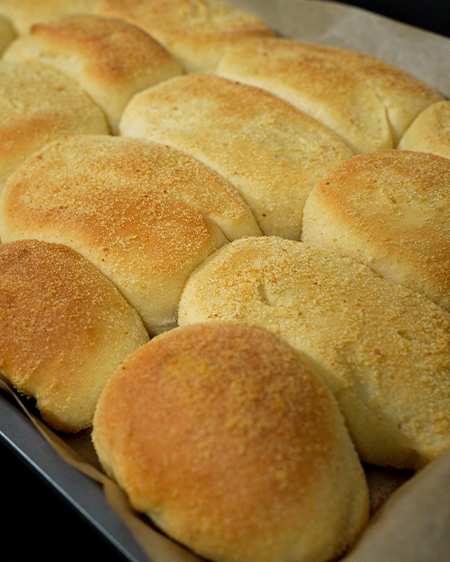
Bake at 370°F (190°C) for 12–15 minutes, then enjoy!
Ingredients:
Instant Yeast
Used as a leavening agent for bread, instant yeast doesn’t need to be activated like active dry yeast. If you enjoy baking, I recommend investing in the kind that comes in a jar. it’s easier to store and more cost-effective in the long run!
Fine Breadcrumbs
Breadcrumbs are made by drying and toasting old bread, then grinding it into a fine, almost powder-like crumb. I both love and hate this because it makes every bite a little messy, but it gives pandesal that signature crumb that makes the experience complete.
All-Purpose Flour (APF)
My favourite flour for baking is all-purpose flour. It’s incredibly versatile and can be used for a wide range of recipes, as long as you know how to handle it. For example, avoid overmixing when making cakes to prevent too much gluten development, or knead dough thoroughly when making bread to build enough gluten. If you don’t want to invest in too many ingredients but still want to explore different types of baking, I’d recommend keeping all-purpose flour in your pantry. From there, you can experiment with other flours to see what you like best. 😄
Fun fact: Pandesal is still delicious even when it’s hard, sometimes even better. We dip it into a hot beverage, and it soaks up the liquid with every bite. We even have a saying: “Walang matigas na tinapay sa mainit na kape,” which means, “There’s no such thing as hard bread when you have hot coffee.”
Equipment:
*links below are affiliate links. If you buy through them, I may earn a small commission at no additional cost to you.


Soft Filipino Pandesal Recipe (Homemade Bread Rolls)
Ingredients
- 3 ⅓ cups All purpose flour (460g)
- 1/3 cup granulated sugar (75g)
- 1 tsp salt
- 1 cup whole milk lukewarm for 50 secs
- 1 pc egg room temperature
- 2 tsp instant yeast (6g)
- 2 tbsp unsalted butter softened
Coating
- 1/2 cup breadcrumbs
Instructions
- In a bowl, combine the all-purpose flour, granulated sugar, salt, and instant yeast.
- Make a well in the center of the dry ingredients, then add the room-temperature egg and lukewarm milk.
- Mix everything until a rough dough forms.
- Slice your softened unsalted butter into pieces, then gently knead it into the dough.
- Knead the dough until the butter is fully incorporated and it feels bouncy. Using a mixer, this can take up to 10 minutes at speed 3, while by hand it may take longer. I usually knead it for 20 minutes or more – an arm workout indeed, but trust me, it’s worth it.
- Place your dough in a greased bowl, cover it, and let it rest for 1 hour at room temperature. If you’re in a cooler environment, you can place the dough inside your oven (turned off) with the light on to help it proof.
- Punch the air out of your dough and gently knead for about 30 seconds. Divide the dough into small portions (about 70 grams each), then shape each piece into a ball.
- Toss your dough in fine breadcrumbs and make sure to fully coat the outside for that signature pandesal crumb.
- Place your divided dough into a baking pan lined with parchment paper, leaving at least 1 inch of space between each piece. Cover it again and let it rest for another hour. We’re almost there, I promise!
- Start preheating your oven to 370°F. At this time, please don’t place your resting dough inside the oven!
- After your dough is done resting, you’ll notice it has slightly increased in size, and now it’s time to bake!
- Bake your pandesal for 12-15 minutes on the middle rack, or until the tops are lightly golden brown, and we’re done!
- Enjoy it with a hot coffee as you reminisce about your childhood!

Kamusta?
I’m the hungry, and the curious Kat!
If food is a love language, then call me a linguist. I love experiencing life through food, and it’s something I enjoy sharing with others. I hope my recipes and stories inspire you to pick up that pan and start cooking – ’cause why not?
If you made my recipe, I would love to see it! Pleaseeee tag me, gurl!


