Spam Musubi
This easy Spam Musubi recipe features pan-fried Spam glazed in a sweet and savoury soy sauce, layered over rice with furikake and wrapped in roasted seaweed. Learn how to make it with or without a musubi mold for a delicious classic Hawaiian snack.
by hungrycuriouskat
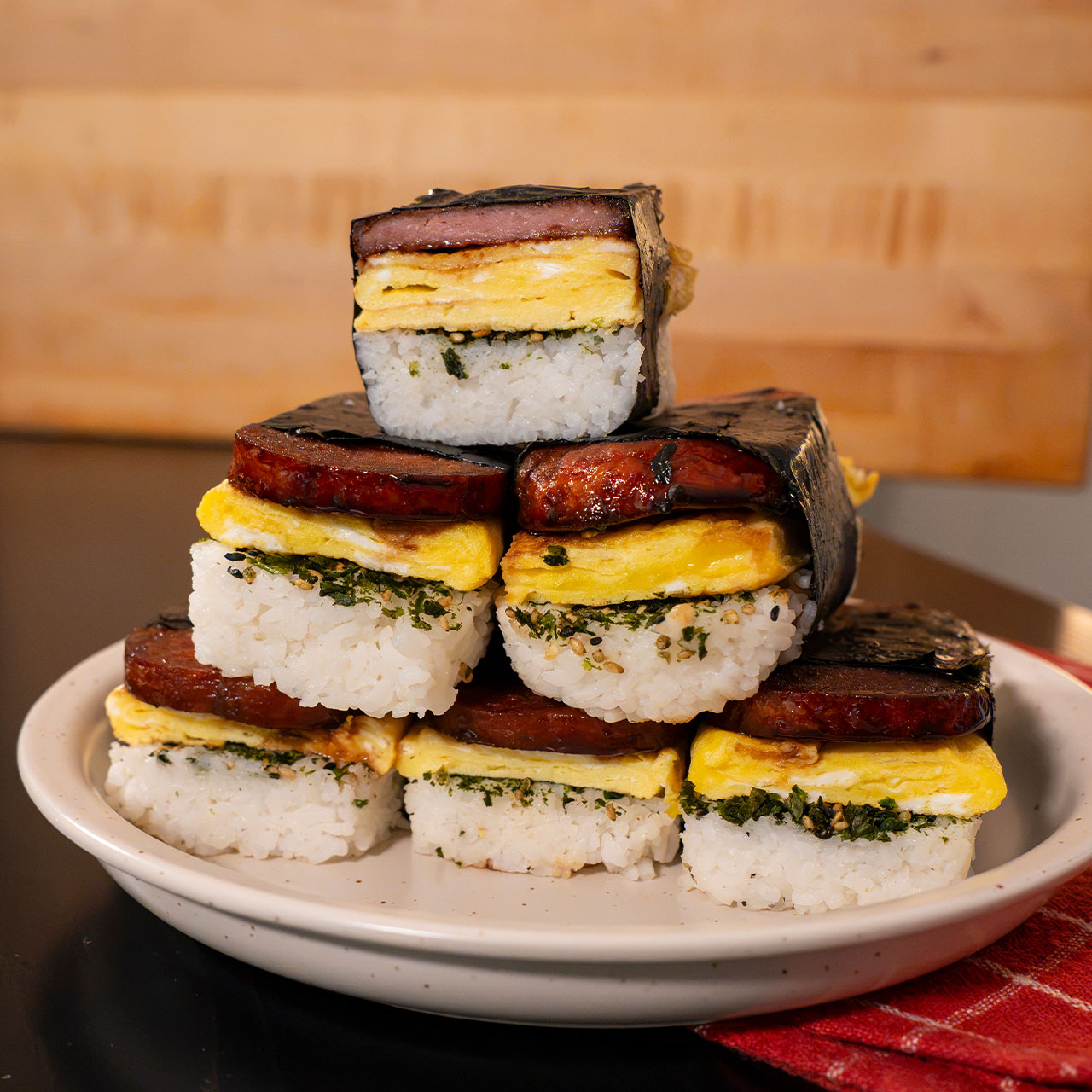
Easy SPAM Musubi Recipe
The Funny-Looking Sushi
College was wild for me, not because of parties, but because it was the time in my life when I became more aware of food outside my comfort zone. One of those was Spam Musubi, which my friend would always buy for breakfast at one of our university’s cafeterias.
I remember seeing what I thought was Maling (the luncheon meat, similar to Spam) on top of a rectangular block of rice wrapped in seaweed. My first thought was, “What an odd-looking sushi,” but my friend later explained that it was actually called Spam Musubi. She gave me a bite, and the rest is history!
I love Spam Musubi because it’s a snack that’s filling and satisfies our love for rice. It’s the perfect finger food for anyone who’s in a rush and wants a little treat to help them get through busy days. It’s definitely not the healthiest food, but I mean, a little Spam once or twice a month can’t hurt anyone!
Being able to explore food doesn’t always mean trying something exotic, but rather trying things that are new to us. So, if you want to try Spam for the first time, this is the recipe I’d recommend.
Also, I’ll be showing you how I like to make it both with and without a musubi mold.
Breaking Down the Recipe:
What is SPAM Musubi?
Spam Musubi is a popular snack in Hawaii. It is made by searing Spam and coating it with a mixture of soy sauce and sugar. It is then placed on top of rice with furikake seasoning and wrapped with roasted seaweed. The flavour is very similar to tocino because of its combination of sweet, salty, and savoury notes, along with the umami from the soy sauce and furikake.
There are two ways you can get the signature shape of your Spam Musubi:
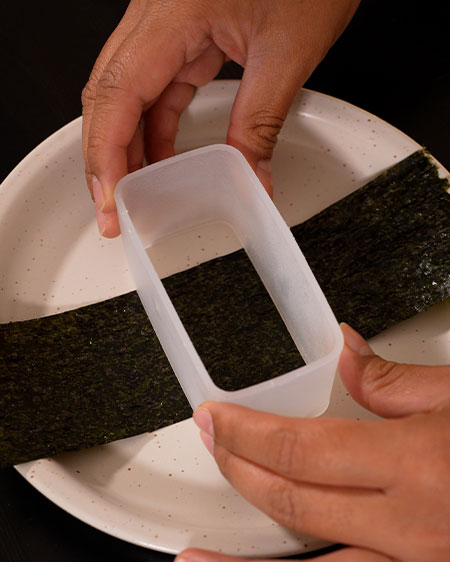
(1) Using a plastic musubi mold
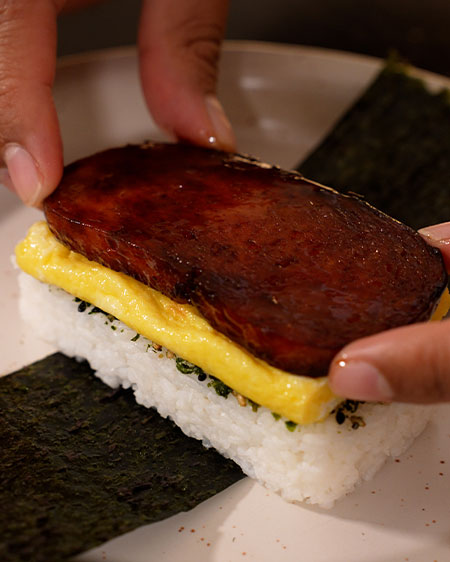
The most popular and easiest way is to layer everything inside the mold over the seaweed. Once it’s done, you just gently press it down and your Spam Musubi is ready.
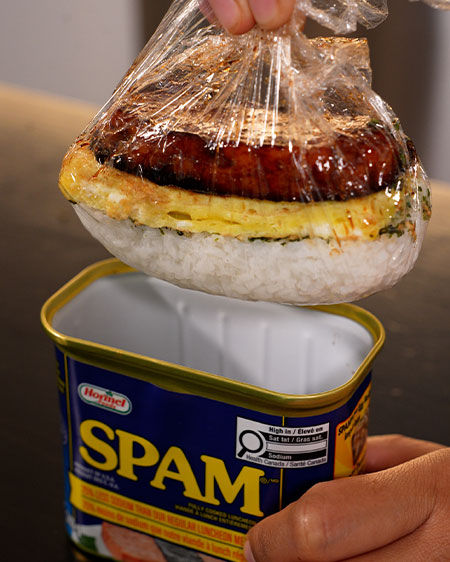
(2) Using the (clean) SPAM tin
It is very important to make sure you clean the inside of your Spam tin first! Line it with a layer of plastic wrap, then start building your layers – rice, furikake, egg (optional), and Spam.
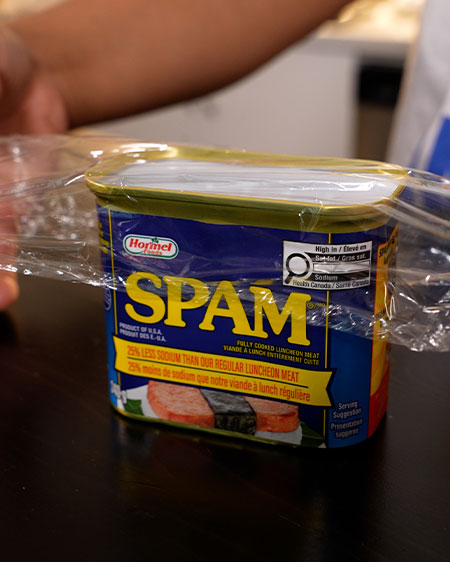
Carefully pull out the plastic wrap and place it over the seaweed, then wrap it tightly.
What is the sauce in SPAM Musubi?
You know the drill! We are about to break down the biggest mystery in every dish – the sauce. Similar to other recipes, the sauce is actually quite simple. It’s a 1:1 ratio of sugar and soy sauce.
The biggest thing for me is the amount of sauce you put on your Spam. Spam is already salty, so it doesn’t need an overwhelming amount of sauce. We need just enough to coat the outside. I also suggest adjusting this depending on your preference. If you are using a different brand of “meat” like luncheon meat, you may want your sauce to be either more salty or more sweet. Just add ½ tbsp at a time of either soy sauce or sugar.
Instructions:
*Detailed instructions and tips available in the recipe card below.
Sauce: In a small bowl, mix your sauce ingredients. Set it aside to let the sugar fully dissolve.
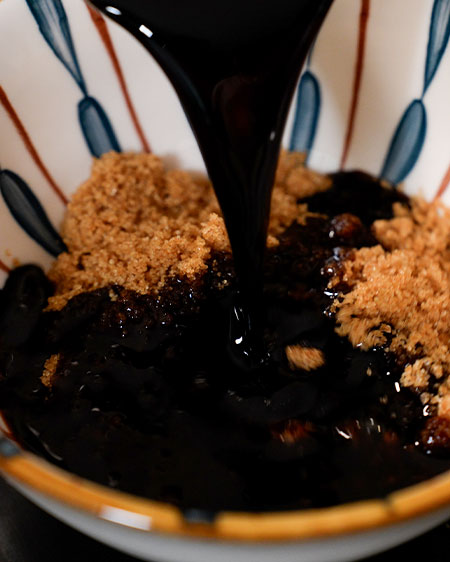
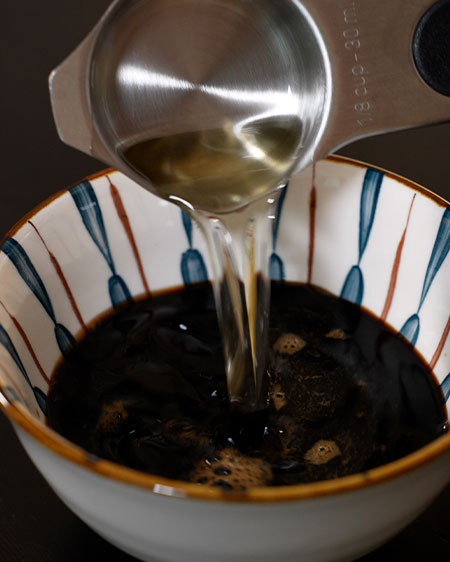
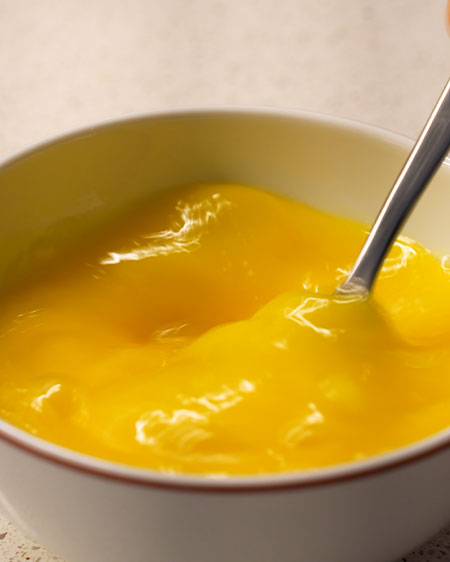
Egg: In a bowl, whisk together your eggs and salt.
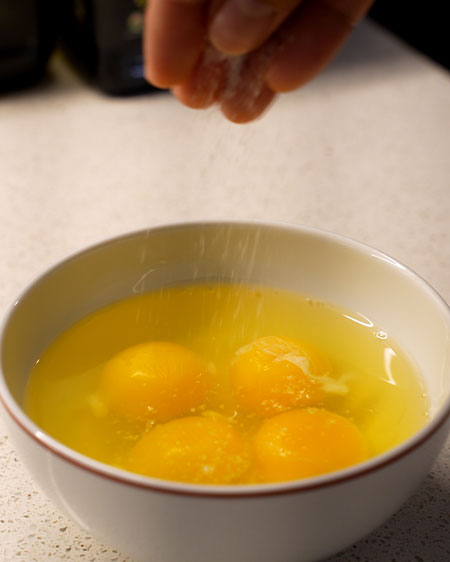
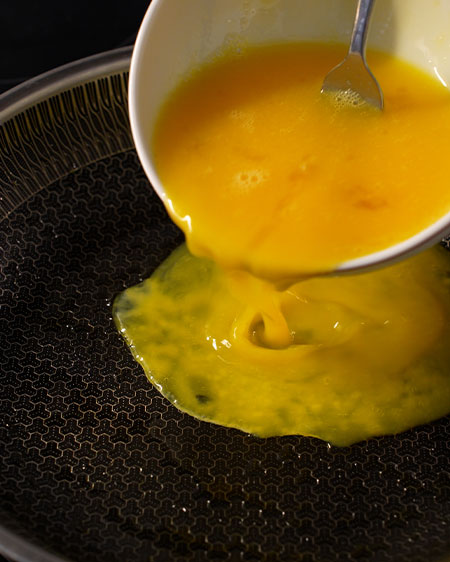
In a pan over medium heat, pour in about ¼ of your egg mixture and let it cook.
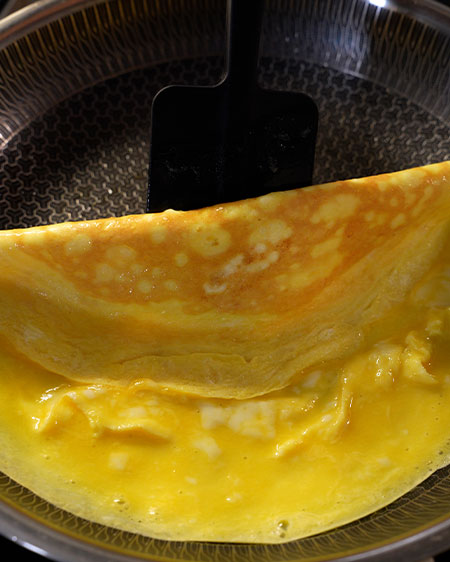
Once the bottom is set, gently fold the egg from one end to the other. Repeat with the rest of your egg mixture, then slice the cooked eggs into pieces about the same size as your Spam.
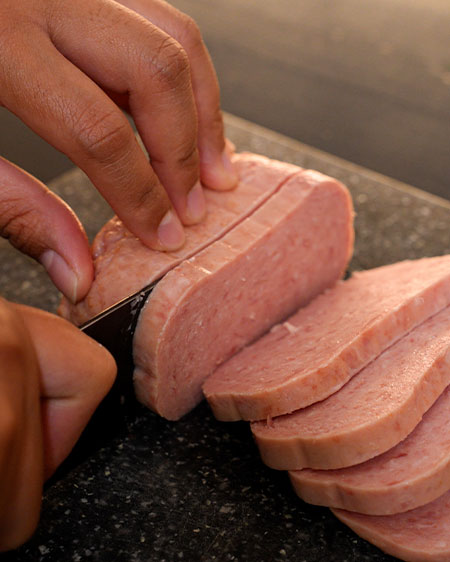
SPAM: Prepare your Spam by cutting it into 8 pieces, about 1 cm thick each.
In a pan over medium heat, add ½ tbsp of oil and fry your Spam until it develops a nice crust on both sides.
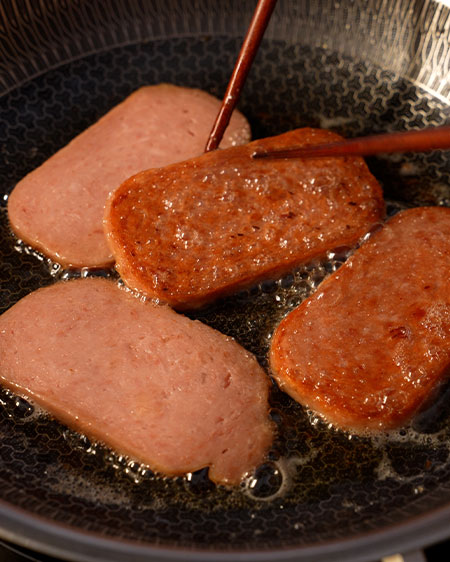
Once you’ve fried all your Spam, pour in half of your sauce mixture and let it glaze the Spam.
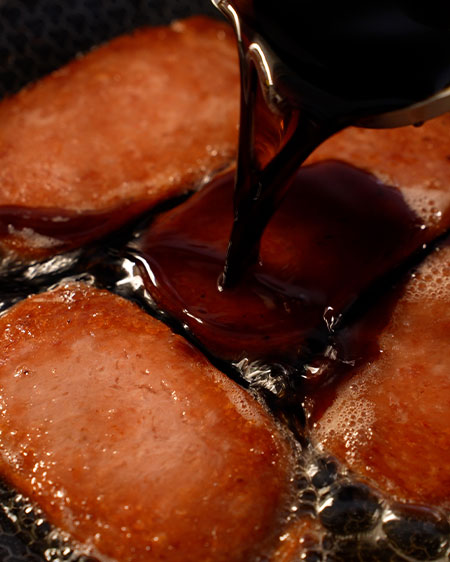
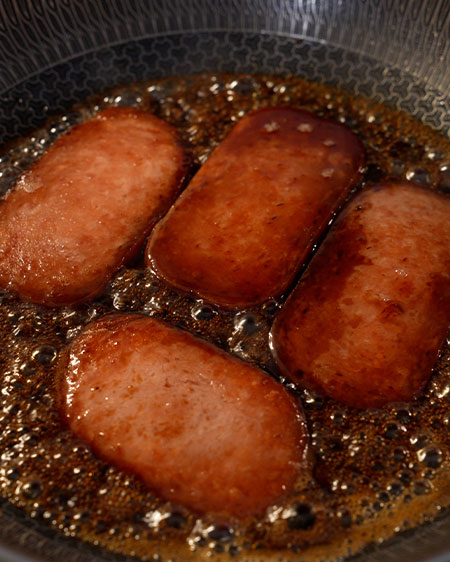
Flip your Spam to make sure both sides are evenly coated with the sauce.
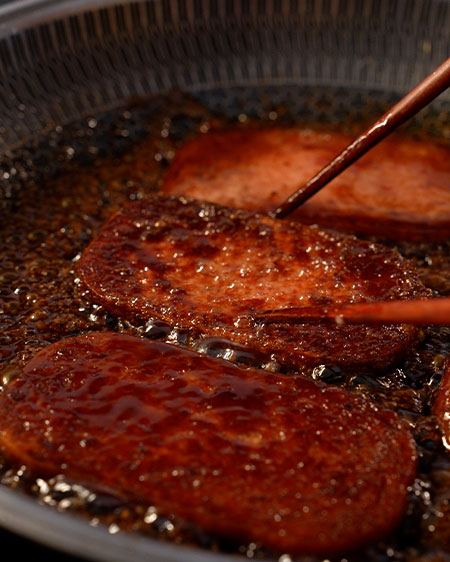
RICE: Pour about 1 tsp of mirin per 1 cup of cooked rice, then mix well.
Assembly: Place your nori on a plate, then place your musubi mold on top of it.
Add rice, furikake, then gently press down to release it from the mold.
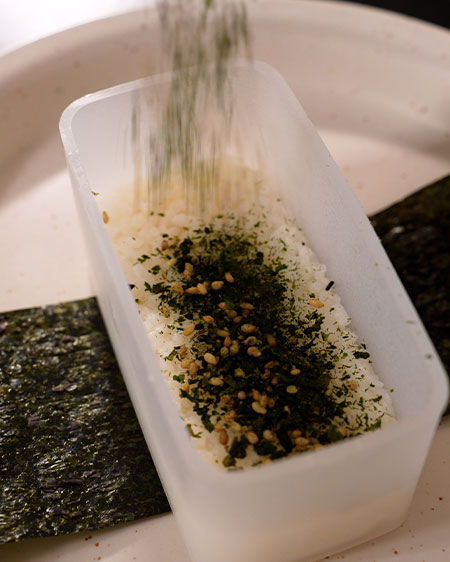
Place your egg on top, then add the Spam.
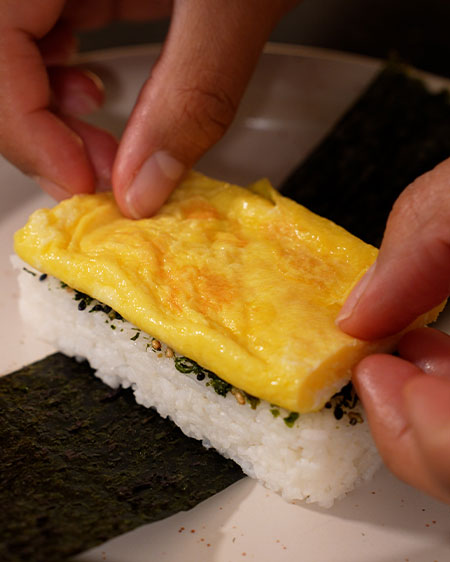
Gently fold the seaweed around the Spam. The trick to getting the sides to stick is to place a little rice at the edges.
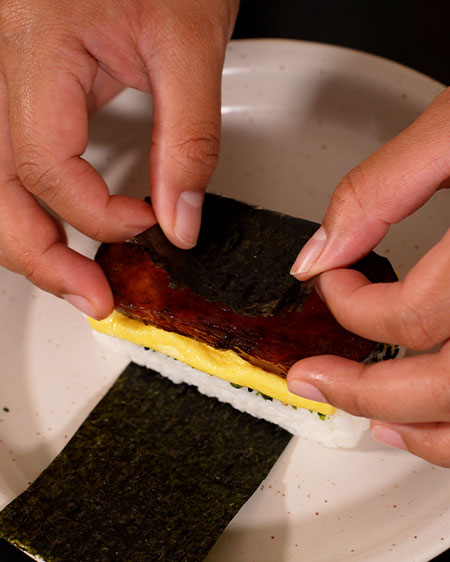
Enjoy your tower of Spam Musubi!
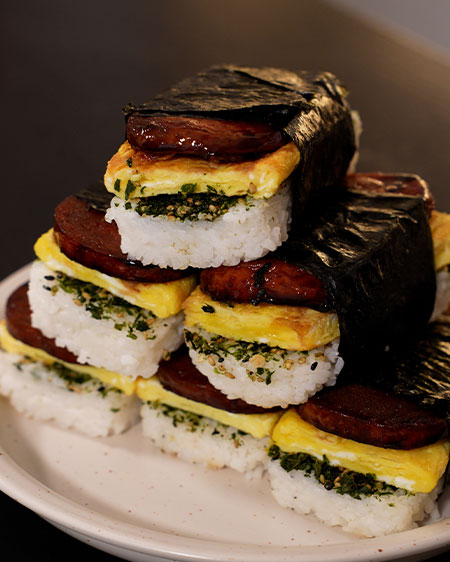
Ingredients:
SPAM
SPAM is basically like meatloaf. It is made out of ground pork shoulder and ham, seasoned with salt and sugar. It comes in a can and has been a very popular canned food in America. It has since been adapted into a lot of dishes, such as Spam Musubi, sandwiches, and fried rice. Now, it is a staple in many people’s pantries because of how convenient it is.
It also has different variations, from regional flavours like maple in Canada and tocino in the Philippines, to low-sodium options, which is what I like to use for this recipe as it helps control the saltiness of the overall dish.
Spam has definitely evolved to cater to the palates of different countries, but its signature flavour will always be distinctive to this brand.
I would say that this recipe can still work even if you use other brands. I know that SPAM can be expensive, so I like switching it with luncheon meat or other similar brands. The taste will be a bit different, but the sauce helps!
Furikake
Furikake is a staple in Japanese cuisine. It is known as a rice seasoning and contains a mixture of roasted sesame seeds (black and white), salt, sugar, and dried seaweed – providing a nice umami flavour and texture to plain rice.
Even though Spam Musubi originated in Hawaii, Japanese influence can be seen in the ingredients such as furikake and seaweed, since the creator, Barbara Funamura, was Japanese-American. Furikake comes in different flavours, but for this recipe we will be using the roasted sesame and seaweed flavour, known as Aji Nori Furikake.
There are two particular brands that I really like (images below). Now, I love putting furikake on everything. It’s just a nice way of incorporating the seaweed flavour into quick dishes.


Roasted Seaweed
Roasted seaweed is made from seaweed sheets that have been brushed with sesame oil, seasoned, and roasted. It’s commonly used in Korean dishes, such as gimbap, and Japanese dishes like sushi!
It’s actually very flavourful and can also be enjoyed as a snack. In the Philippines, I believe my introduction to roasted seaweed was the small versions that come in little plastic tins. We would always eat it as part of our sushi bake! It’s delicious and a great pair with any rice or noodle dish.
Fun fact: The Tocino Spam actually tastes very similar to Spam Musubi, so if you don’t want to make a sauce, you can just use this version and eat it with rice!
Equipment:
*links below are affiliate links. If you buy through them, I may earn a small commission at no additional cost to you.


Easy SPAM Musubi Recipe
Ingredients
- 1 can SPAM low sodium
- 3 sheets roasted seaweed cut into 2-inch strips
Spam Musubi Sauce
- 1/8 cup brown sugar
- 1/8 cup soy sauce
- 1 tbsp mirin
Rice
- 3 cups cooked rice
- 3 tsp mirin
Eggs
- 5 pcs eggs
- 1/4 tsp salt
Instructions
- Sauce: Mix your sugar, soy sauce, and mirin in a small bowl. Set it aside while we prepare the other components.
- Eggs: Scramble your eggs and salt in a bowl.
- In a pan over medium heat, put about ½ tsp of oil and spread it around. Pour about ¼ of your egg into the pan.
- Once the bottom is set, gently fold the eggs from one end to the other. Make sure the width is about the same as your SPAM. Set it aside and repeat 3 more times until you've used up all of the egg mixture.
- SPAM: Slice your Spam into 8 pieces, about 1 cm thick each.
- Fry your Spam in a pan over medium heat until the outsides are crispy.
- Once all your Spam has been fried, return it to the same pan and pour in your sauce mixture.
- The sauce will start to thicken, so move your SPAM around the pan to make sure it's evenly coated. Flip each piece once you see a light crust forming on one side.
- Transfer the glazed Spam to a plate.
- Rice: In a bowl, combine your cooked rice and mirin, then mix. Let it cool so some of the moisture can evaporate.
- Assembly (if you are using a musubi mold): Place your seaweed sheet on a plate, then put your musubi mold on top. Add your rice and furikake, then press it down to release it from the mold.
- Place your egg on top of the rice, followed by your glazed Spam. Pull one side of the nori over the Spam to wrap it.
- Assembly (if you are the SPAM tin): Make sure to wash your tin first, then line it with plastic wrap. Add your rice and flatten it with a spoon. Add your furikake, egg, and Spam.
- Lift the plastic wrap to gently remove your musubi, place it on top of your seaweed sheet, and wrap!
- Enjoy your SPAM Musubi at home, or wrap it in plastic wrap or place it in a container to enjoy as an on-the-go snack!

Kamusta?
I’m the hungry, and the curious Kat!
If food is a love language, then call me a linguist. I love experiencing life through food, and it’s something I enjoy sharing with others. I hope my recipes and stories inspire you to pick up that pan and start cooking – ’cause why not?
If you made my recipe, I would love to see it! Pleaseeee tag me, gurl!


