Homemade Bibingka (Filipino Christmas Rice Cake)
This Homemade Bibingka is a soft, chewy Filipino rice cake made with rice flour, coconut milk, cheese and salted egg, then baked in banana leaves for that signature aroma. Inspired by the bibingka I grew up seeing on the streets during Filipino Christmas, this recipe is my attempt to recreate a taste I was afraid I had forgotten.
by hungrycuriouskat
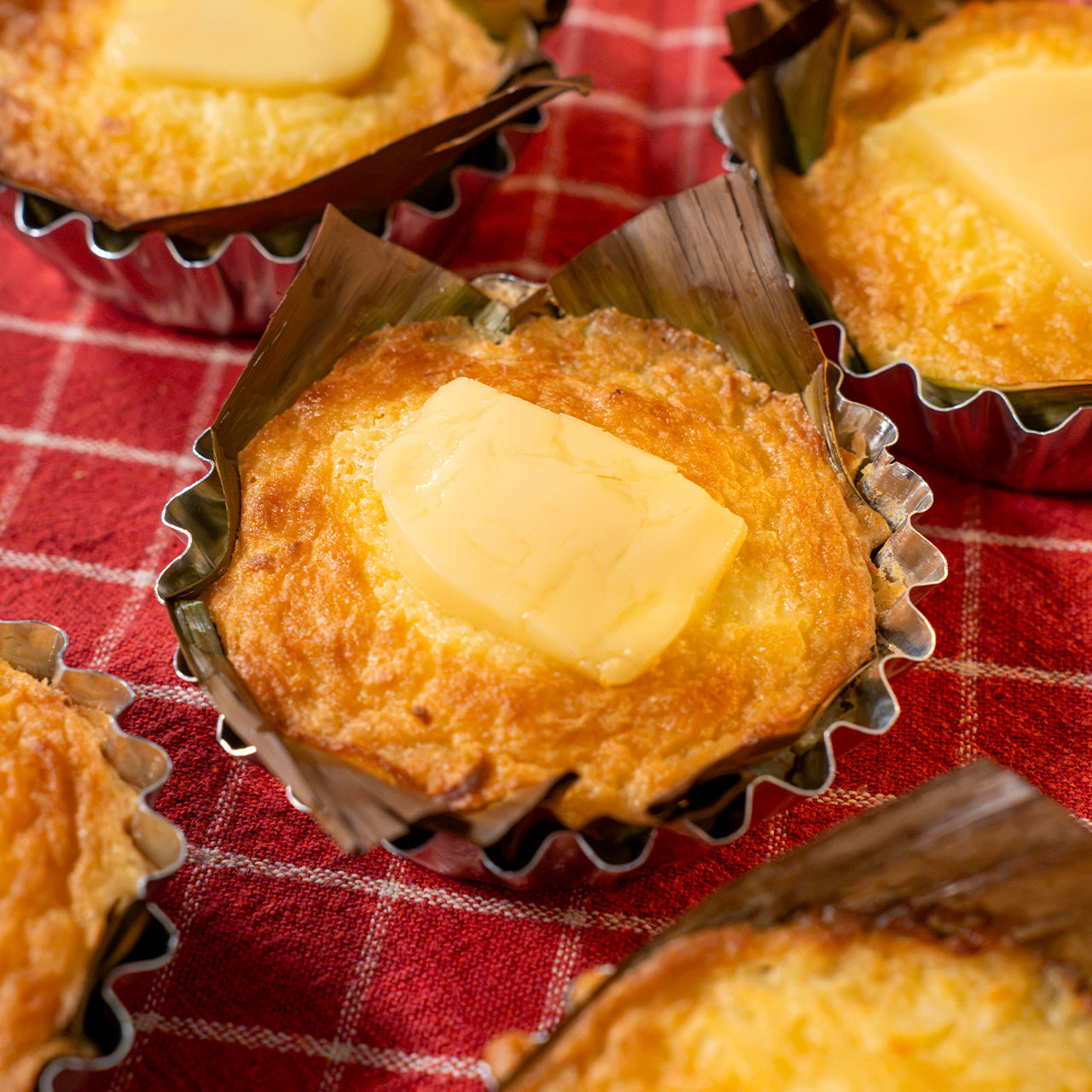
Homemade Bibingka Recipe (Filipino Christmas Rice Cake)
The Forgotten Taste
Is it weird to say that I crave a taste that I cannot even remember? It was a very random day of the week when I started missing bibingka – maybe it’s not a coincidence, though, because during Filipino month, September is already the holiday season, and bibingka is usually served during that time. So, I started my journey of recipe testing this Christmas snack. The first version turned into a puto (rice cake) and mamon hybrid. It was good, but not quite bibingka. The second version was so dense that I needed to soak it with a beverage in order for it not to feel so dry. As I was choking on a piece of my second batch, I realized I couldn’t, for the life of me, remember the taste of bibingka, and it terrified me.
Because what do you mean I cannot remember the texture and flavour of a snack that I grew up with? I would see it in countless corners of the street during the holiday season, and it’s one of the reasons why I love waking up early, especially in December, to go out. The streets are full of pots over charcoal, each one containing the famous rice cake, and now all I have is the memory of my titos and titas cooking it in the street. It felt like a core memory was stolen from me, or worse, I purposely lost it without even knowing.
I did what any panicked person would do and started asking people to describe to me what bibingka is for them. The story that stuck with me was my mom’s. My mom told me that my grandma actually made amazing bibingka. She was known for her rice cakes in their area because she would always make her own galapong (traditional rice dough). Even though my grandma is gone, my mom would still actively seek out and eat food that is reminiscent of her – like buying bibingka after Simbang Gabi and eating it the way they used to. I realized that losing the taste of bibingka was not random, but rather a result of me thinking it would always be there, even if I didn’t make an effort to remember it. That thought alone kept me awake at night.
So, I want to make this post with the final version of my bibingka recipe as a reminder to always make an effort to remember the dishes that made me fall in love with my culture. Traditions that are not only shared by Filipinos, but also core memories that remind us of the people in our lives. Because now I want to remember bibingka in the same way my mom remembers it, so that even if my grandma is gone, stories about her will live on through dishes like this.
Nanay, I will try to make you proud with this recipe, but if you can give me yours in my dreams, I’ll probably share that instead…I mean, I would treasure it forever.
Breaking Down the Recipe:
What is Bibingka?
Bibingka is not like any other cake, and I am not being cliché or pick-me, because unlike other cakes that use cake flour or all-purpose flour, this Filipino cake uses rice flour. Traditionally, however, it uses soaked rice to make the batter, and this is called galapong. Even though nowadays you will see a lot of vendors using rice flour instead as a quick alternative, the texture of the cake is still what makes bibingka stand out.
The rice component gives it a springy or chewy texture. It’s very soft to the touch, almost like a chiffon, and if you are lucky enough to have the traditional version, the crumbs almost melt in your mouth because of how soft it is. This baked rice cake uses charcoal as a cooking method. I love it because during the holiday/Christmas season in the Philippines, you will see so many vendors with charcoal and palayok on the streets, cooking bibingka early in the morning. It truly is a great way to get into the holiday spirit. Eating a warm bibingka that you just bought after Simbang Gabi with coffee or tsokolate de batirol is so Filipino-coded and truly a tradition that made me fall in love with Filipino Christmas.
What is Galapong?
Galapong is a traditional Filipino rice dough made from rice soaked in water. My mom would tell me stories about how they had a big stone that she would use to grind up the soaked rice so my grandma could make different kakanins!
Galapong is what gives rice cakes that soft, bouncy texture, and although a lot of bibingka is made using shortcuts (i.e., rice flour/glutinous rice flour), places in the provinces still use this ingredient for that authentic taste. Although a lot of bibingka shops that you will find in malls use different methods, there’s one famous place in the Philippines that is known for their Bibingka Galapong, and that is Chef RV.
So, if you are ever in the Philippines and it’s not the Christmas season, it’s okay! Try it out at Chef RV and enjoy the unique and addicting texture of a cake made from galapong.
Why do you line your molds with banana leaves?
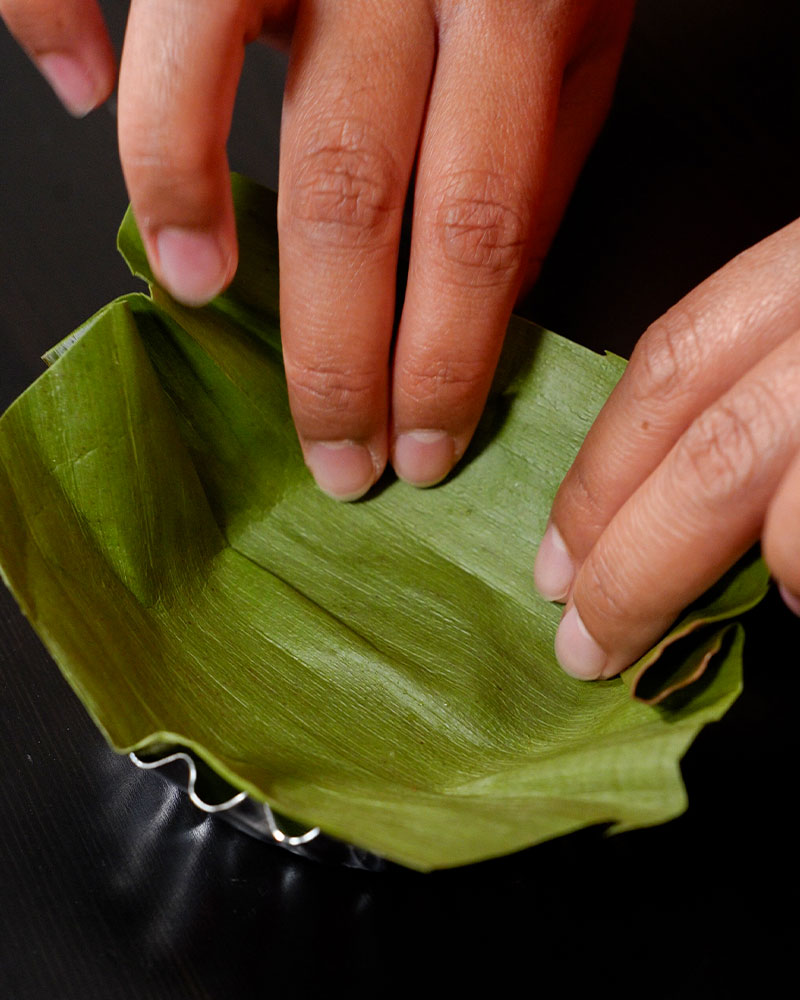
Filipinos have always been resourceful, and this is something that’s very apparent in a lot of our dishes. Parchment paper is not accessible to a lot of households, but what you will see in a lot of places in the Philippines are banana trees! The banana leaves can be used as a container for food, like a makeshift plate, but we also use them to line our tins or pans. This is not only resourcefulness, but it’s strategic because the fragrance of the leaf adds flavour to your bibingka, as it basically acts as a cupcake liner!
So, if you can’t find this, you can use normal parchment paper (we gotta use what we have, and that’s the Filipino way!). But I would say it’s worth trying to find banana leaves at an Asian grocery store. They usually sell them in the frozen section.
What’s the difference between rice flour and glutinous rice flour?
Two white flours, both destined to be delicious dishes, but what’s the difference? Well, I am glad you asked! The biggest difference is the type of rice they’re made from. Rice flour is made from regular rice. It has a less sticky texture and is commonly used as a thickening agent, like cornstarch, or in things like light batters. Glutinous rice flour, on the other hand, is made from glutinous or sticky rice. It’s what gives mochi and other chewy desserts that signature soft and sticky texture.
For this recipe, we’ll be using both: rice flour to mimic the traditional texture of bibingka, and glutinous rice flour to give it that soft, slightly chewy texture.
Instructions:
*Detailed instructions and tips available in the recipe card below.
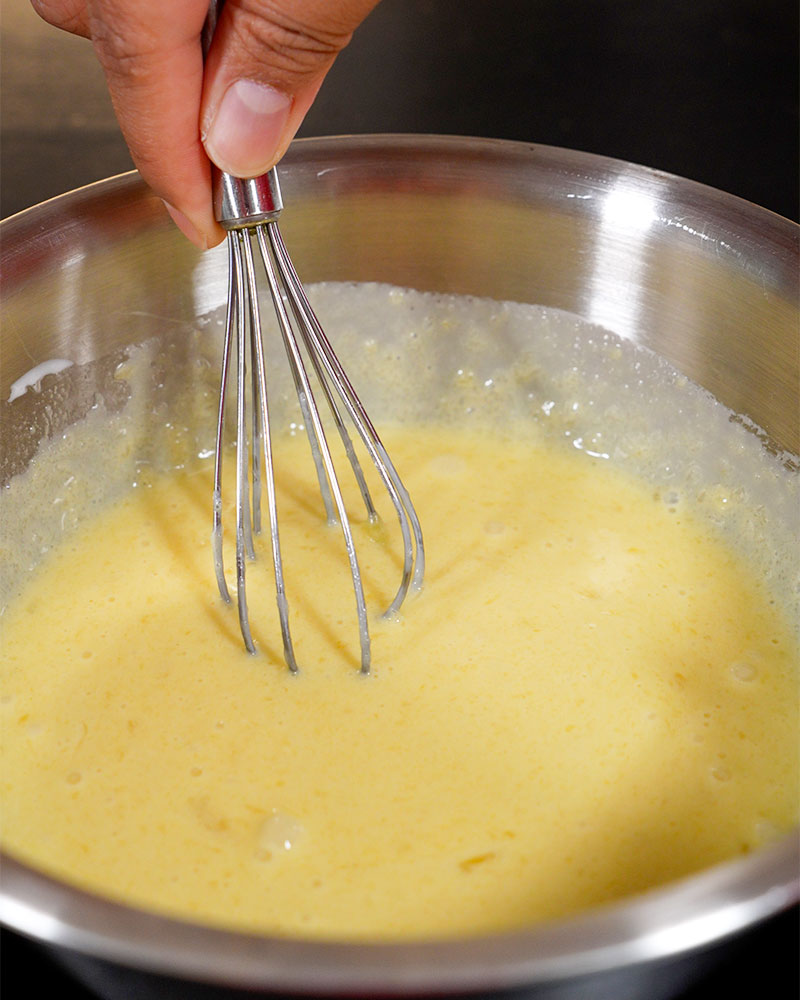
In a bowl, mix your wet ingredients – sugar, melted butter, eggs, and coconut milk.
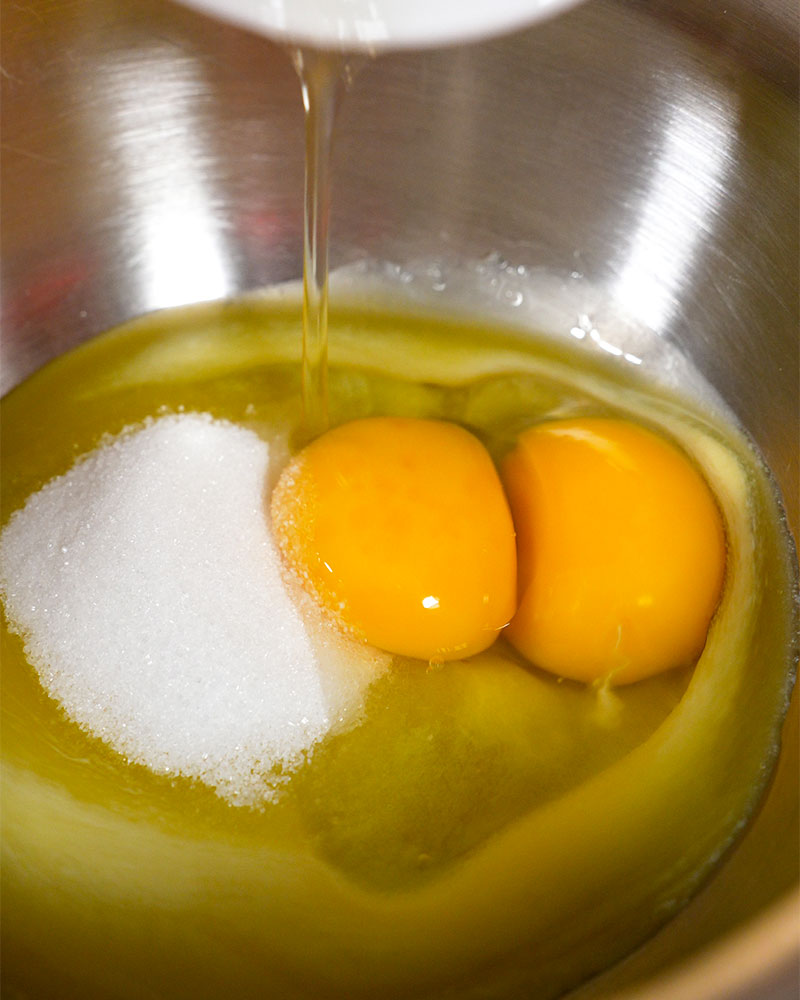
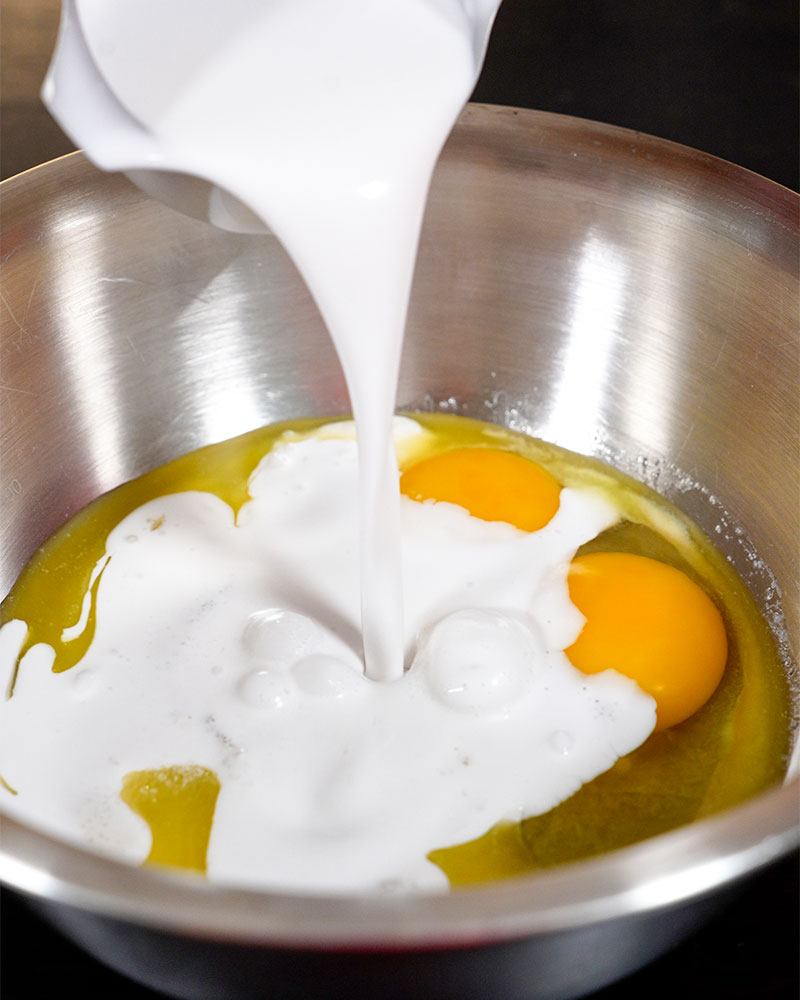
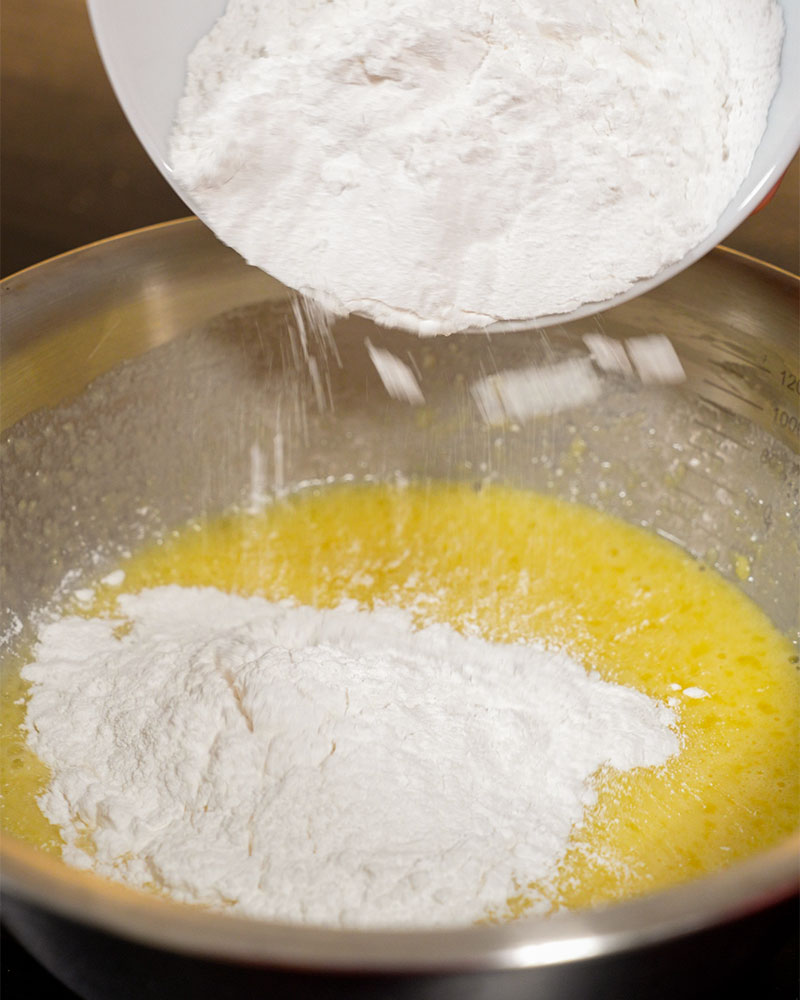
Pour in your dry ingredients and whisk until everything is well combined.
Preparation before baking: Line your tins with banana leaves (a total of five) and preheat your oven to 400°F.
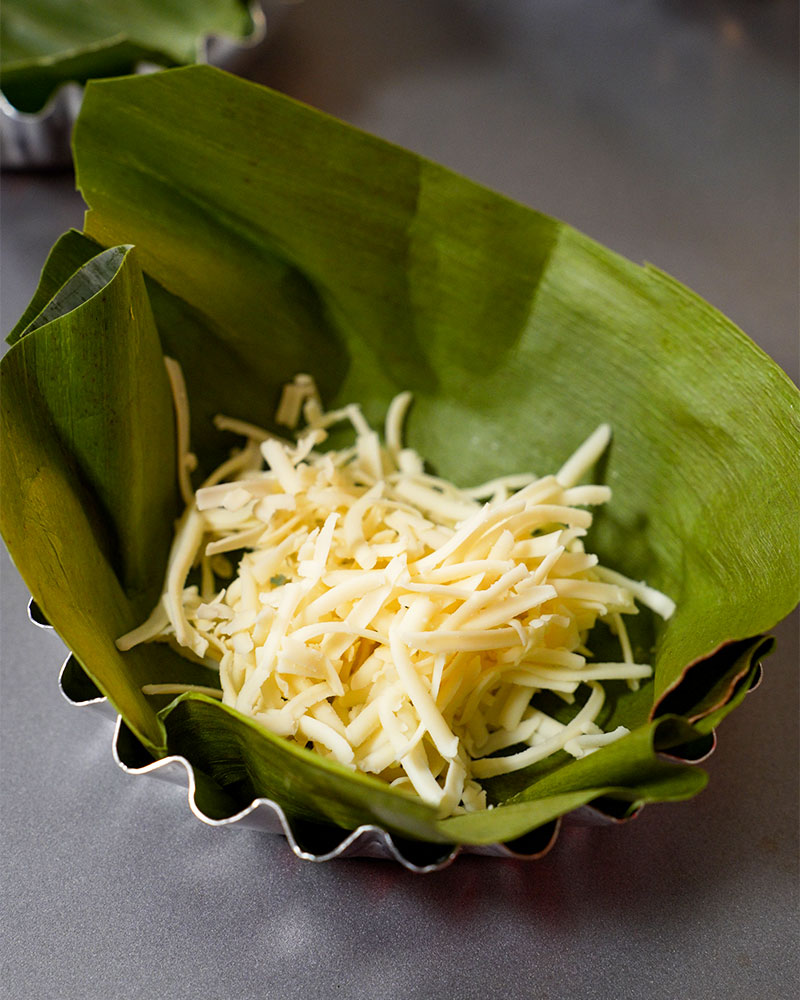
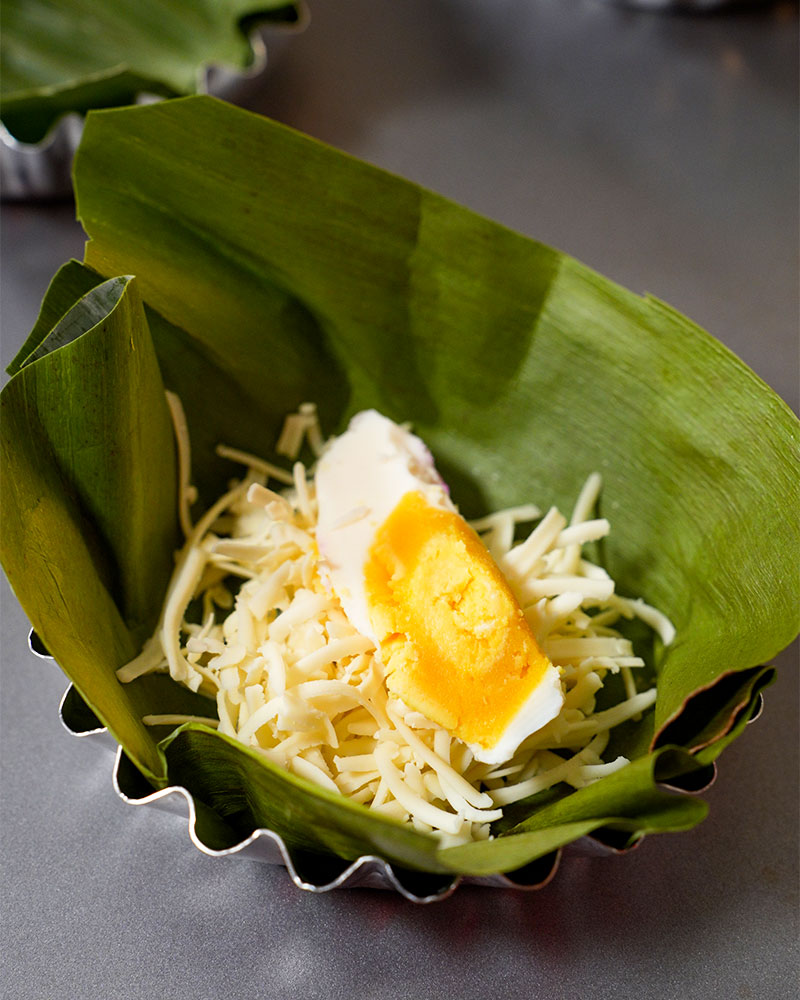
Put some grated cheese and a slice of salted egg in your tins lined with banana leaves.
Pour in your batter almost all the way to the top.
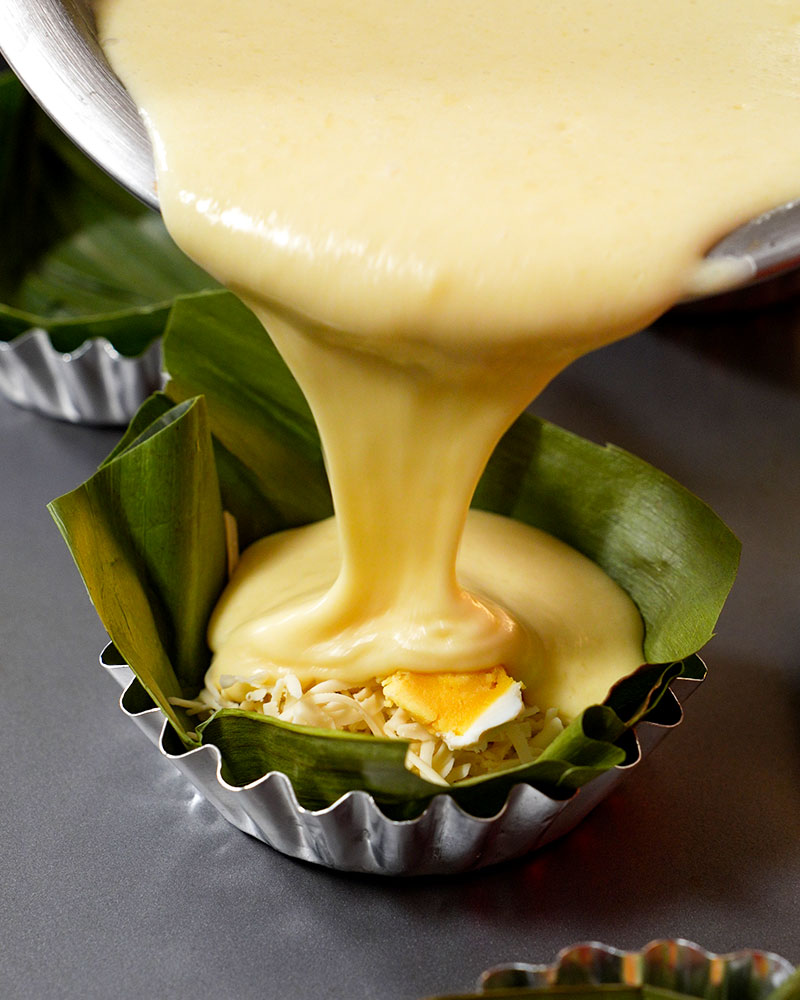
Bake your bibingka for 15 minutes, then pull it out of the oven.
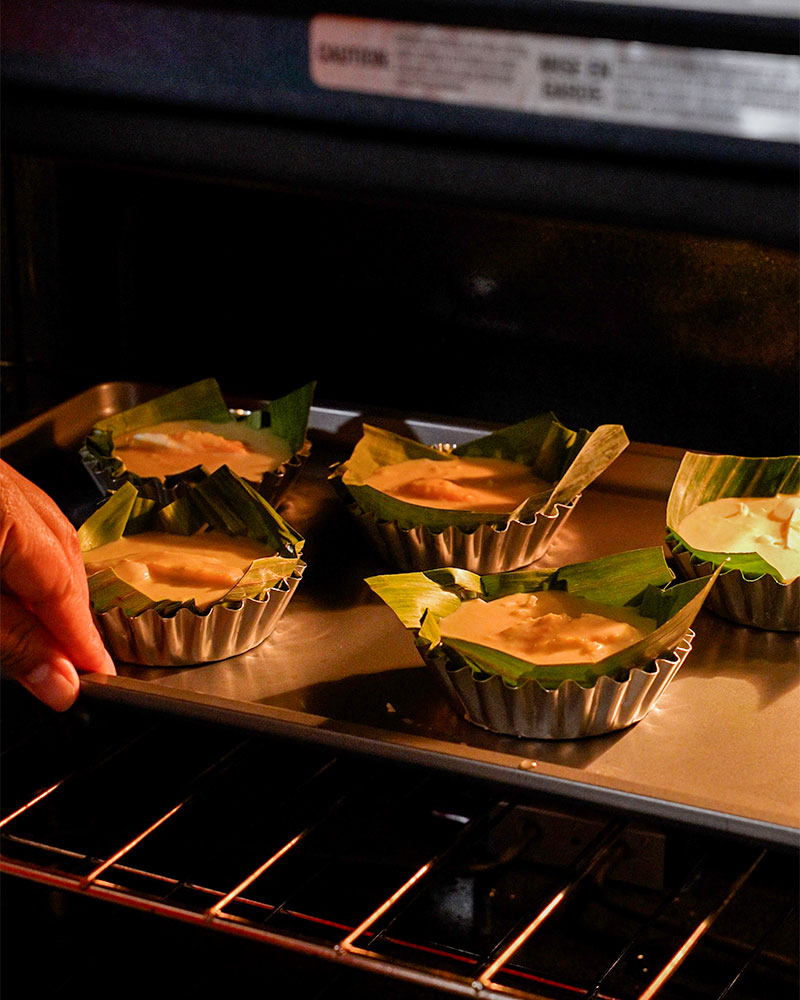
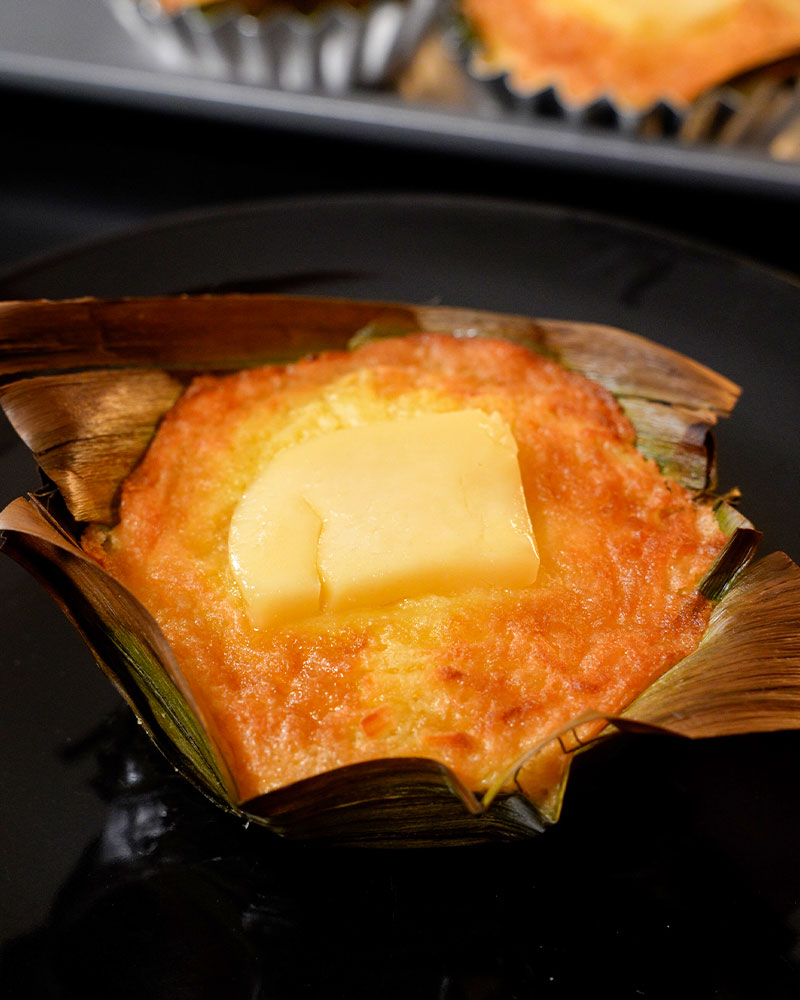
Place a small slice of cheese over the top, then broil it for 2-3 minutes, or until the top is slightly toasted and the cheese is slightly melted.
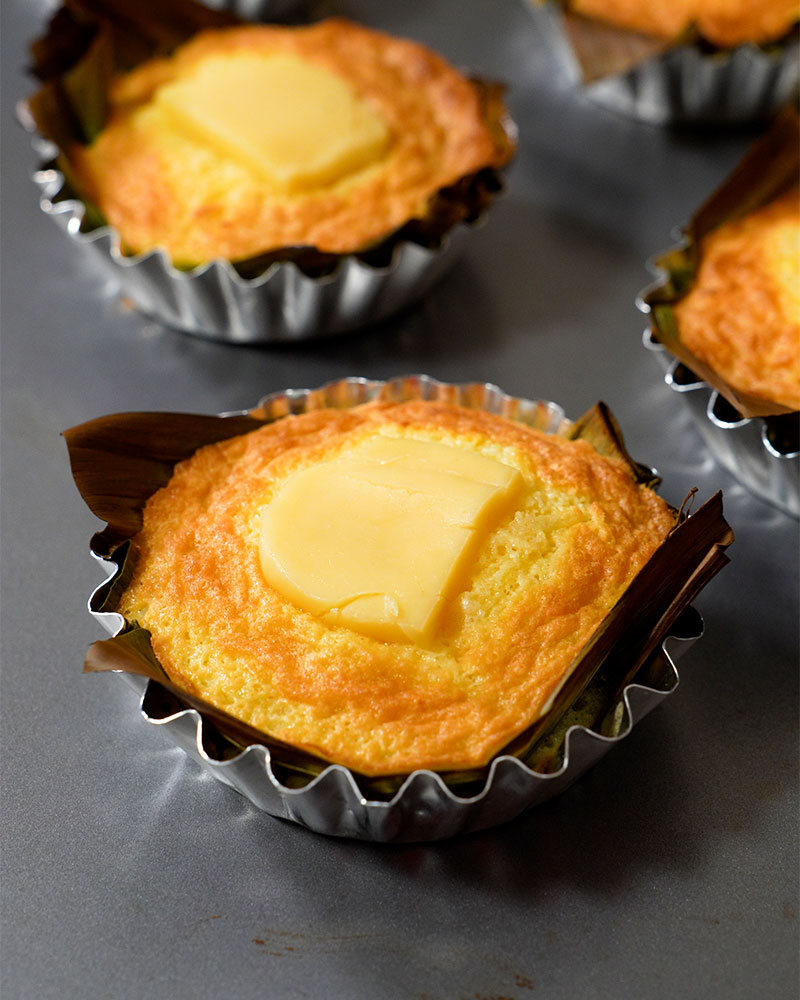
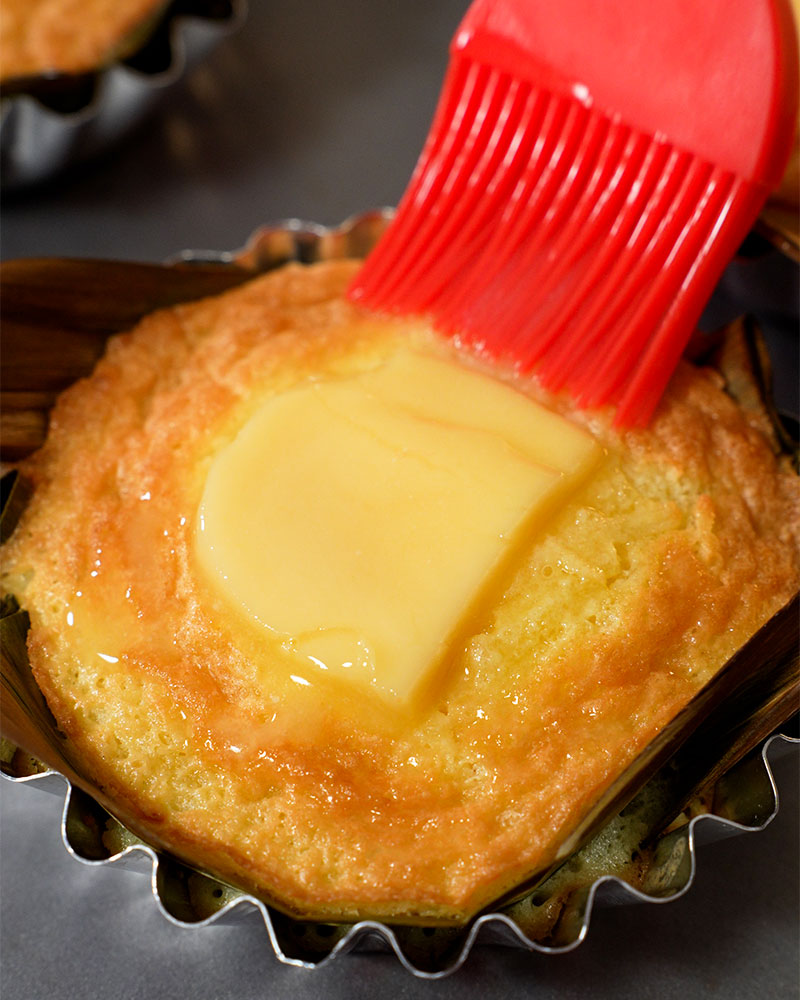
Brush the top with more butter and sprinkle with sugar (if you like it sweeter).
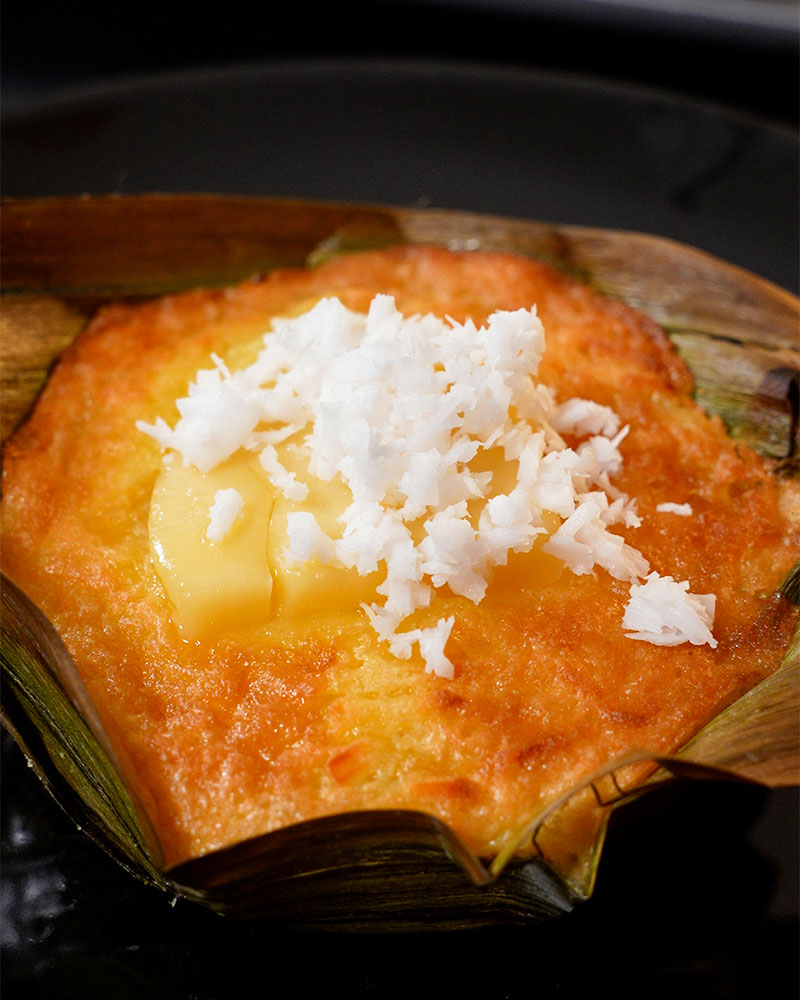
Let it cool slightly and enjoy! You can top it off with niyog (freshly shredded coconut) and/or more cheese, and feel the spirit of Christmas take over!
Ingredients:
Salted Duck Egg
Salted duck eggs have two processes: (1) the brine or salt mixture, where the raw duck egg will marinate for several weeks with the shell on! Salt can pull out liquid and penetrate the shell, which is essentially the reason why salted egg is denser (similar to how you can overcook a boiled egg). (2) Boiling or steaming. After the brining process, the eggs are not yet cooked, but the salty flavour has already been infused. They are then cooked by boiling them in water or steaming them.
You will notice that in grocery stores, there are eggs that are sold raw, where each egg is tightly wrapped in plastic, and inside you will notice the salty, muddy mixture. These are typically raw, so you will need to boil them, but there are also ones that are already cooked and are usually painted purple!
Salted eggs are very delicious and are considered a premium topping! My family loves to eat them as a side dish with tomatoes.
Eden Cheese
This cheese brand is something that I like using when cooking any Filipino desserts or snacks. It’s considered a cheddar cheese, but it’s less sharp and milkier. I feel like this flavour profile is such a good addition to a sweet treat, as the saltiness is not as overwhelming, so it balances well with the sweetness. I have used this in one of my favourite recipes, which is cheese roll, and I also used it as a topping for my ube mamon. It’s definitely a pantry staple for me, but I know it can be pricey, especially if you are outside the Philippines, so you can also use any mild cheddar as an alternative!
Fun fact: There are actually different varieties of bibingka in the Philippines! We have royal bibingka, which is a type of rice cake that is sticky, sweet, and cheesy. There’s also Aling Kika’s Special Bibingka – a sticky rice cake topped with latik (toasted coconut curds).
Equipment:
*links below are affiliate links. If you buy through them, I may earn a small commission at no additional cost to you.
Mamon mold (4’’)
I used a mamon mold to shape my bibingka. I noticed it doesn’t quite take the shape of the tin since the banana leaf is pretty sturdy, so it still ended up looking like cupcakes. I bought mine in the Philippines, but I also saw a similar one on Amazon (link below).
If you don’t want to buy a mamon mold but you have cupcake tins, those can work too! Just be wary of the cooking time. I would suggest trying to bake them for 10 minutes and using a toothpick to check if the inside is cooked. Because they are smaller, they will cook faster than the regular baking time.


Homemade Bibingka Recipe (Filipino Christmas Rice Cake)
Ingredients
- ½ cup rice flour (55 g)
- ¼ cup glutinous rice flour (30 g)
- 1 tsp baking powder
- 1 pc egg
- 1 pc egg yolk
- ¼ tsp salt
- ⅔ cup coconut milk
- ⅓ cup sugar (70 g)
- 4 tbsp butter
Filling:
- 1 ½ cup mild cheddar cheese grated
- ½ salted egg sliced thinly
Toppings:
- 5 slices cheese
- 1 cup freshly grated coconut optional
- 1 tbsp melted butter
Other:
- 1 banana leaf
- 5 pcs mamon molds/tins
Instructions
- Combine your melted butter, sugar, egg, egg yolk, and coconut milk in a bowl.
- Add in your dry ingredients and make sure everything is smooth and well combined.
Preparation before baking
Baking the Bibingka
- In your tins lined with banana leaf, put in about 1-2 tbsp of your grated cheese, depending on how cheesy you want it to be, and a slice of salted duck egg.
- Pour in your bibingka mixture almost to the top of your tin. You can fill it halfway, give it a little tap, then continue to fill it to the top.
- Bake it for 13-15 minutes, or until the edges are set and the middle is still a bit jiggly. This will also brown the top a bit.
- Place a small slice of cheese over the top, then broil it for 2–3 minutes, or until the top is slightly toasted and the cheese is slightly melted.
- Brush the top with more butter and sprinkle with sugar (if you like it sweeter).
- Let it cool slightly and enjoy! You can top it off with niyog (freshly shredded coconut) and/or more cheese, and feel the spirit of Christmas take over!

Kamusta?
I’m the hungry, and the curious Kat!
If food is a love language, then call me a linguist. I love experiencing life through food, and it’s something I enjoy sharing with others. I hope my recipes and stories inspire you to pick up that pan and start cooking – ’cause why not?
If you made my recipe, I would love to see it! Pleaseeee tag me, gurl!


