Creamy Gochujang Noodles
Buldak Carbonara Noodles but make it homemade: Creamy, spicy gochujang noodles made with heavy cream, garlic, bacon, and butter for a rich Korean-inspired carbonara-style fusion dish that’s bold, silky, and addictive.
by hungrycuriouskat
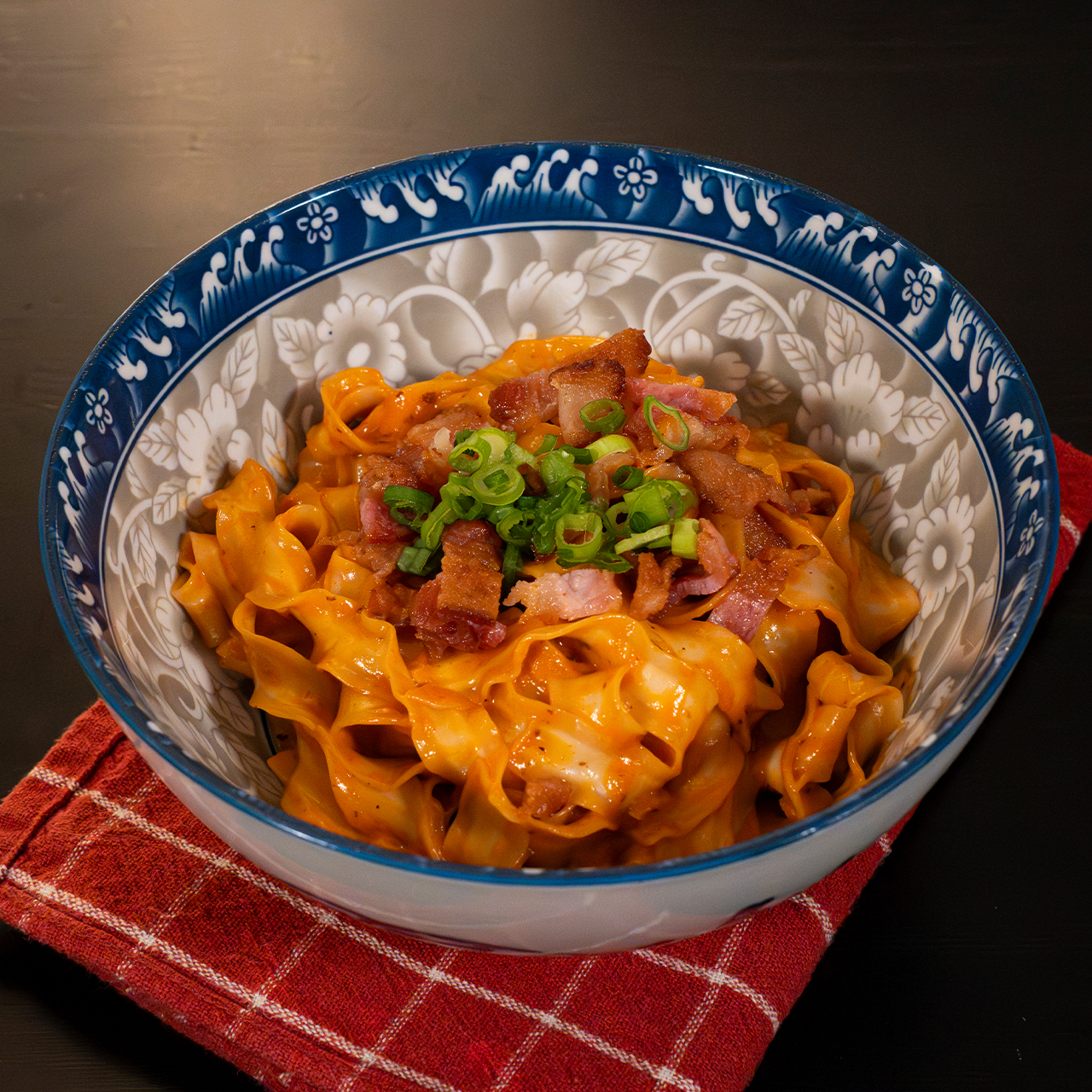
Creamy Gochujang Noodles Recipe
A Duo We Need: Creamy and Spicy
I love creamy pasta and noodles, but I’ve always found them a bit too indulgent at times. To balance that richness, I’d usually add chilli flakes for a little kick. This dish is the perfect answer to that dilemma. It uses simple ingredients and techniques, but delivers amazing flavour. It honestly reminds me a lot of Buldak Carbonara, but this version makes me feel less guilty since it’s not as processed. The umami from the gochujang gives the cream a nice balance, so it doesn’t feel like you’re just slurping dairy. It adds a depth of flavour that ties everything together.
If you ever want to cook for your date but aren’t very familiar with the kitchen, this is the dish I’d recommend. Minimal effort with big flavours sounds like the perfect date to me.
It gives you more time to get to know each other *wink*.
Breaking down the recipe:
What is Monter au Beurre (adding butter at the end)?
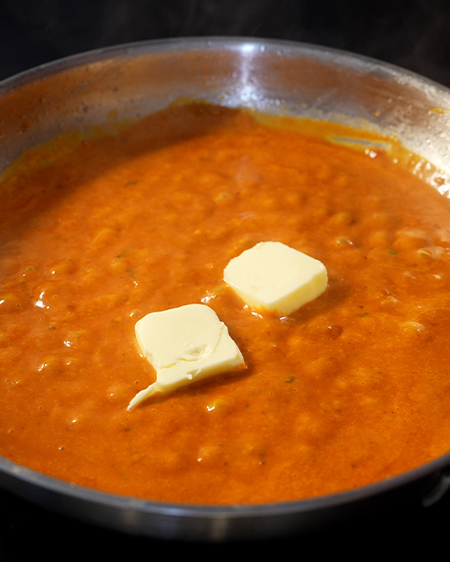
I find that the key to making the sauce glossy and perfectly emulsified between the cream and bacon fat is adding cold butter at the end. This technique is called monter au beurre, and it’s commonly used in pasta sauces, especially tomato-based ones. It creates a creamier, velvety texture and helps the sauce feel more cohesive. You’ll instantly notice the difference once the butter is added at the end.
Why do we add noodle water?
This is a very similar technique to monter au beurre. The starch from the noodles helps the sauce cling to them while also helping the dairy emulsify with the oil instead of becoming too thick. This gives the sauce a smooth texture that coats the noodles really well. It’s a very common technique when making pasta and noodle sauces. If the sauce starts to become too thick, I like adding a bit of the noodle water to loosen it up again.
Instructions
*Detailed instructions and tips available in the recipe card below.
Cook your bacon in a pan until crispy.
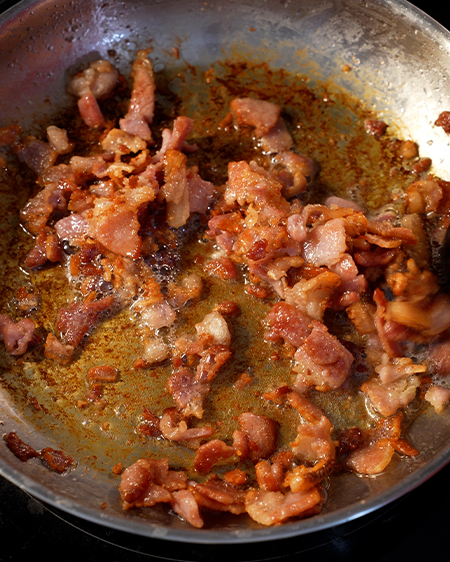
Depending on how long your noodles take to cook, you can start preparing them while the bacon cooks.
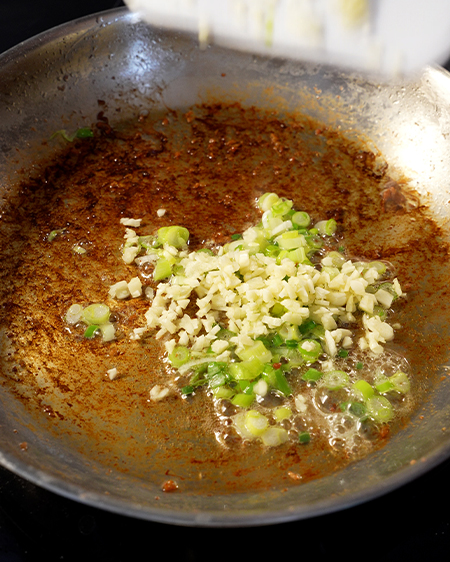
Remove the bacon and any excess oil, then sauté the green onions and garlic.
Pour in the gochujang and heavy whipping cream, then let the sauce simmer.
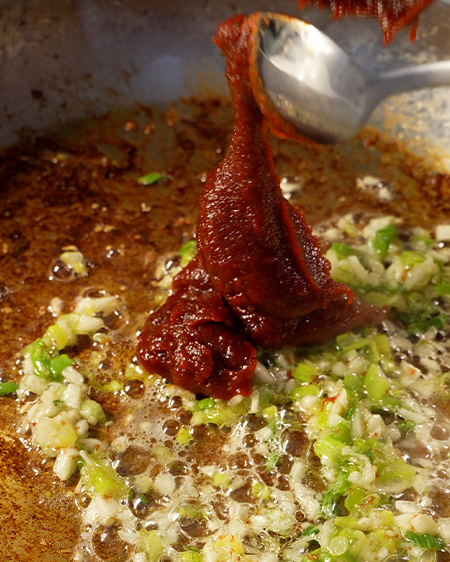
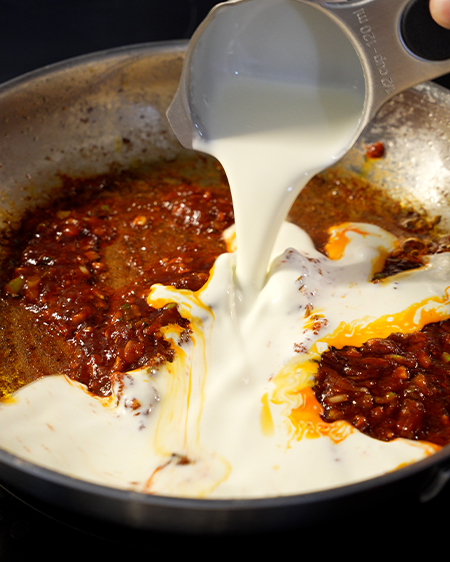
Add sugar to balance the flavours. Turn off the heat, then add the butter and let it melt over the residual heat.
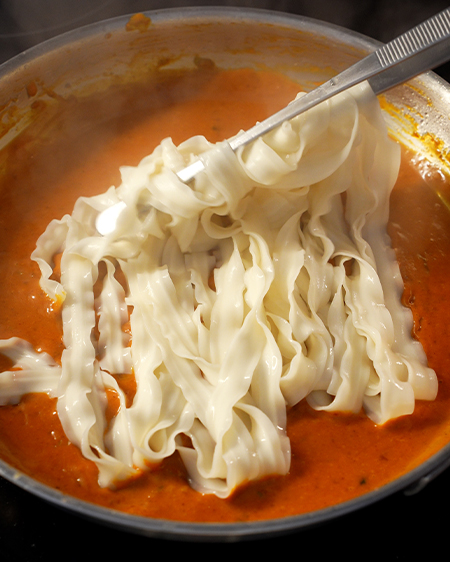
Add your cooked noodles along with some of the pasta water used to cook them.
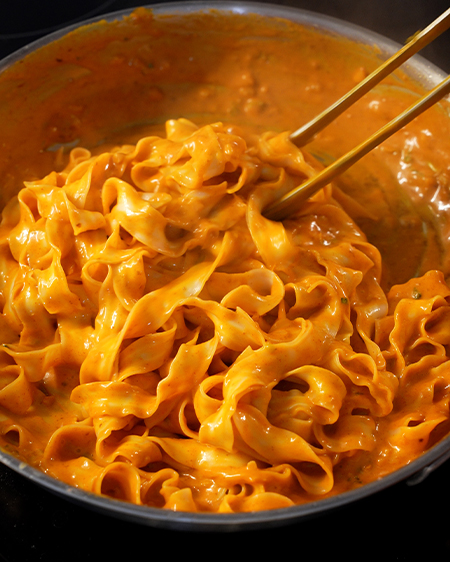
You can add the cooked bacon here and save some for topping.
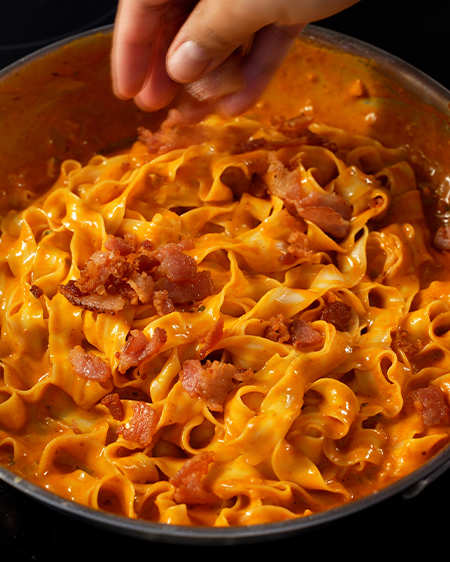
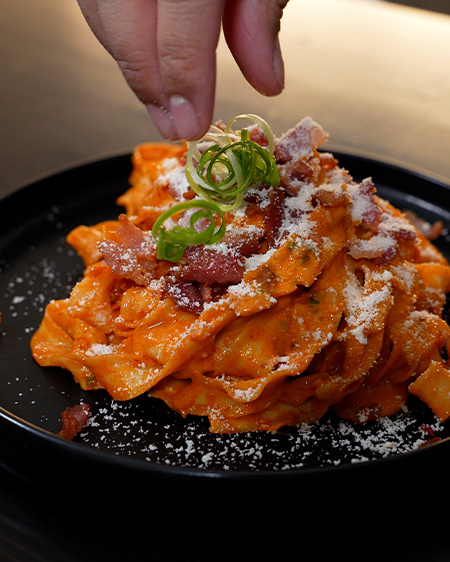
Garnish with green onions, Parmesan, and bacon!
Ingredients:
What is Gochujang?
Also known as red chilli paste, this condiment is used in many Korean dishes. Its flavour profile is a combination of savoury, spicy, and slightly sweet, with a hint of sourness from fermentation. That’s what makes it the perfect ingredient to balance the creaminess of the heavy cream in this recipe. It adds a lot of depth, making the dish taste like more than just a creamy noodle dish.
This is actually very versatile and can be used as a sauce, flavouring for stews, or for stir-frying food.
Heavy Cream VS Milk
The difference between heavy cream and milk lies in their fat content. Heavy cream is made from the higher-fat portion of milk, so its fat content is much higher, typically ranging from 35% to 40%. Milk, on the other hand, is pasteurised (heated to remove bacteria) and has a much lower fat content, ranging from about 1.8% (skim milk) to 3.5% (whole milk). Heavy cream is often used in cooking because of its higher fat content, which allows it to withstand heat without easily curdling or breaking.
Noodles
I recently discovered this type of noodle, and it has quickly become my favourite. It’s called Taiwanese hand-cut noodles. For this recipe, you can use any type of noodles or pasta you like – I’ve seen a lot of people use udon as well. I personally prefer Taiwanese hand-cut noodles because they’re flat, and the slightly curled edges hold onto the sauce really well. They’re perfect for slurping with this kind of sauce, and their width gives you more noodle in each bite, so you can actually taste the noodle without it being overpowered by the sauce.
Fun fact: Traditional Italian carbonara is made with egg yolks and Parmesan cheese, emulsified with pasta water. However, in the Philippines, our version of carbonara uses heavy cream, which is very similar to this recipe. We typically use ham or bacon as the protein and top it with plenty of cheddar cheese.
Equipment:
*links below are affiliate links. If you buy through them, I may earn a small commission at no additional cost to you.


Creamy Gochujang Noodles (Spicy Korean Carbonara-Style Recipe)
Ingredients
- 150 g chopped bacon (less sodium preferred)
- 1/2 cup heavy cream
- 1-2 tbsp gochujang (depending on how spicy you want it)
- 1 tsp sugar
- 2 stalks green onion chopped
- 4 cloves garlic minced
- 2 tbsp butter
- 2 blocks your choice of noodles (150g)
- 1/2 cup water from the noodles
Garnish
- 1/4 cup Parmigiano Reggiano grated
Instructions
- Cook your noodles according to the package instructions. You can use either udon noodles or, in my case, Taiwanese hand-cut noodles. Once cooked, rinse them in cold water to help keep them al dente. Make sure to save 1/2 cup of the noodle water!
- Fry your bacon in a pan until slightly crispy.
- Remove the bacon, chop it into small pieces, then set it aside.
- Using the bacon fat for extra flavour, sauté the green onions and garlic over medium heat.
- Add the gochujang and cook it until it starts sticking slightly to the pan, similar to how you would cook tomato paste.
- Pour in the heavy cream and mix well. Stir continuously and let the sauce come to a gentle simmer.
- Add 2 tablespoons of butter and mix well. You’ll instantly notice the sauce become glossier, which helps it coat the noodles really well.
- Your sauce will start to thicken, so gradually add your noodle water and mix it in.
- Mix in the noodles and top with the chopped crispy bacon.
- Finally, garnish with bacon (if you haven’t used it all), cheese, and green onions. Enjoy!

Kamusta?
I’m the hungry, and the curious Kat!
If food is a love language, then call me a linguist. I love experiencing life through food, and it’s something I enjoy sharing with others. I hope my recipes and stories inspire you to pick up that pan and start cooking – ’cause why not?
If you made my recipe, I would love to see it! Pleaseeee tag me, gurl!


