Spanish Bread
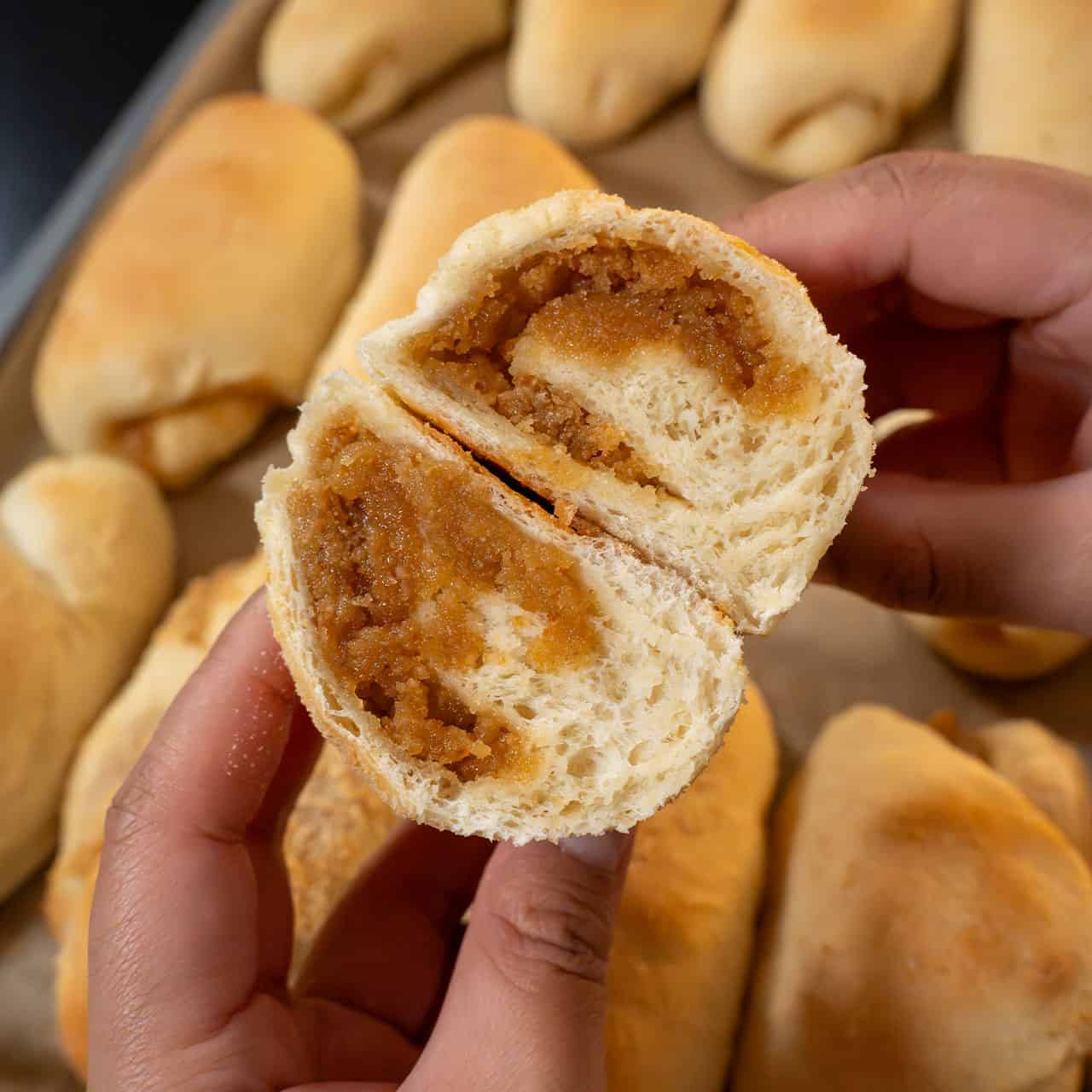
Soft and fluffy Filipino Spanish Bread filled with a sweet, buttery filling, coated in breadcrumbs for the ultimate nostalgic panaderya treat.
by hungrycuriouskat
Spanish Bread Recipe
Table of Contents
My 3 PM Merienda
3:00 PM – my favourite time of the day.
I would wake up from my siesta (afternoon nap) with a smile on my face because I knew I would be going to the panaderya (Filipino bakery) with my grandma. This was also the time when everything was baked fresh. You could literally smell it from across the street.
One bread always stood out to me, and that was Spanish Bread. I would always ask the lady at the panaderya if I could get the ones that were oozing with filling, and to my delight, she would even let me choose which one I wanted.
These were moments in my childhood that felt so mundane at the time, yet they are the ones I crave the most.
Now, I like the idea of having one dough recipe for making similar breads because it eliminates extra work and allows you to make multiple batches! So, this recipe uses my Pandesal dough. The only differences are the oven temperature, baking time, and folding technique since Spanish Bread has a filling.
I never noticed it before, but this actually reminds me of a cinnamon roll. They follow the same concept: folding the filling into the dough, making every bite irresistible.
Making this bread felt like going back in time and eating that warm, buttery, sweet bread while holding a plastic bag full of it on the walk home.
When you make this recipe, I hope it brings you a sense of nostalgia.
*I’m not crying… you are!*
Breaking Down the Recipe:
What is Spanish Bread?
It’s a Filipino sweet roll that was created during the Spanish colonial period. Despite its name, it is an original Filipino bread. It reflects the influence of the Spaniards on our food culture, especially in bakeries, as European-style baking traditions became more widespread in the Philippines during that time.
One theory is that the name was given to make the bread more appealing during the Spanish colonial era.
Typically, Spanish Bread is sold as a merienda (afternoon snack) in panaderias. It’s a light bread with a sweet, buttery filling rolled into a log. It’s one of those foods, like sinigang or adobo, that’s hard not to love, especially if you grew up in the Philippines. It’s definitely a bakery staple and a must-try!
What is the filling inside Spanish Bread?
Growing up, I always wondered what the filling inside Spanish Bread was that made it so addictive. Now, I finally know the answer. It’s a bit anticlimactic, but its main components are butter and sugar, which is why it has those notes of caramel.
My trick is to use softened butter instead of melted butter. This gives the filling a bit of structure, making it easier to spread onto the dough and less likely to spill out when rolling.
I recently found out from a friend that the Spanish Bread she grew up with was grainier, while mine is smooth. Both are good, it really just depends on your preference. So, if you like your Spanish Bread grainier and on the drier side, you can add more breadcrumbs to the filling. I hope this helps you recreate the Spanish Bread you grew up with.
Instant Yeast VS Active Dry Yeast
Yeast is commonly used as a leavening agent in bread. These little buggers are the reason your dough rises after a bit of rest (they’re kind of like us). Both instant yeast and active dry yeast work for most recipes, but there are a few things to keep in mind. Instant yeast can be mixed directly with your dry ingredients and activates more quickly, while active dry yeast needs to be bloomed first before use. To do this, mix it with lukewarm milk and a bit of sugar, then let it sit for about 10 minutes until it becomes foamy – at that point, your yeast is activated.
In this recipe, we’ll be using instant yeast so there’s one less thing to think about, allowing us to focus on kneading the dough – the second most important part of making bread.
Dough Check: Windowpane Test
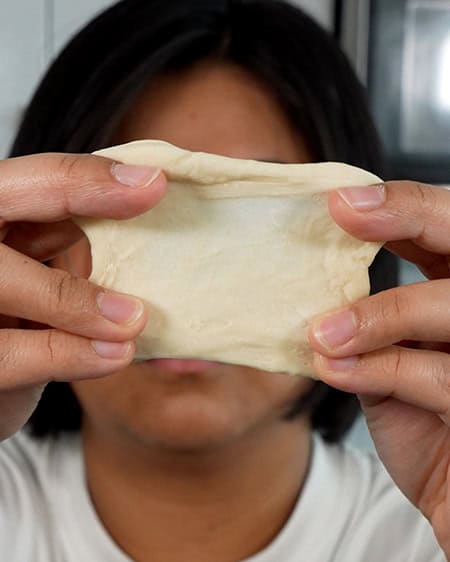
It’s important to develop gluten when kneading your dough because it helps make your bread airy instead of too dense. It also allows the dough to expand properly during baking instead of going flat. My favourite way to check if the gluten is fully developed is through the windowpane test. This is when you take a piece of dough and gently stretch it with your fingers until it becomes thin like a sheet. If it stretches without tearing and light can pass through it, it means your dough is golden and you stop kneading. But if it’s still breaks when you stretch it, then your dough needs more love and kneading.
Instructions:
*Detailed instructions and tips available in the recipe card below.
Dough:
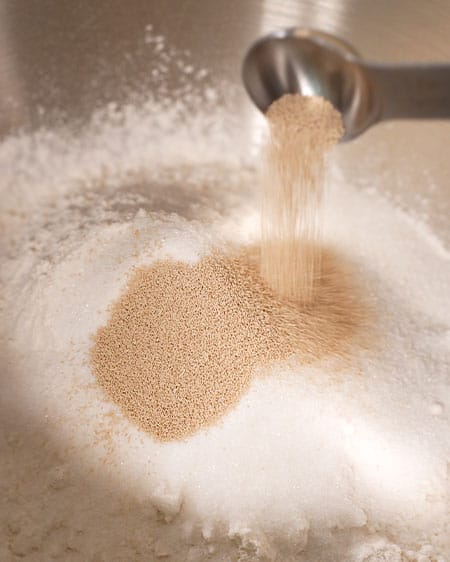
Mix all your ingredients in a bowl, EXCEPT for the butter:
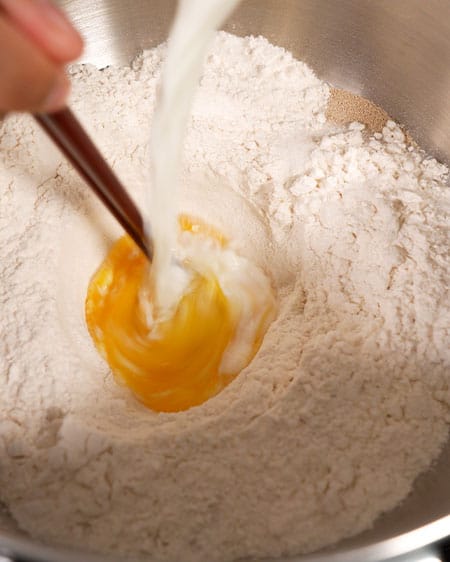
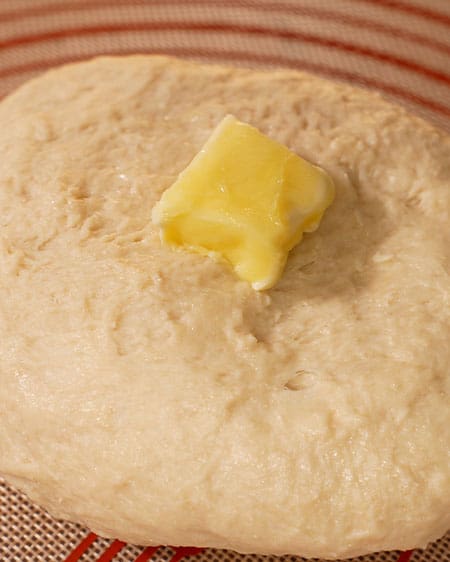
Once you’ve formed a rough dough, add the butter and knead it into the dough.
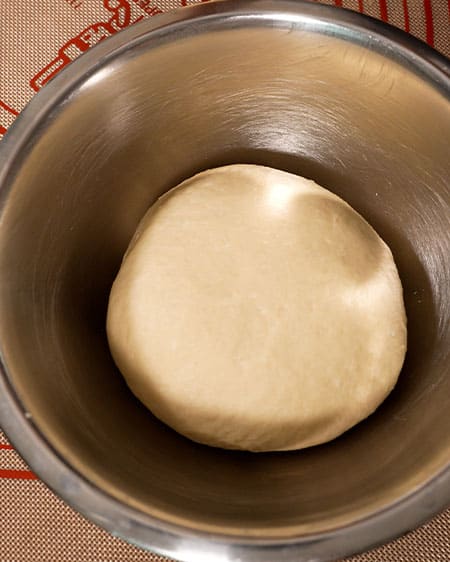
Let the dough rest in a greased, covered bowl for 1 hour, or until it has doubled in size.
Filling:
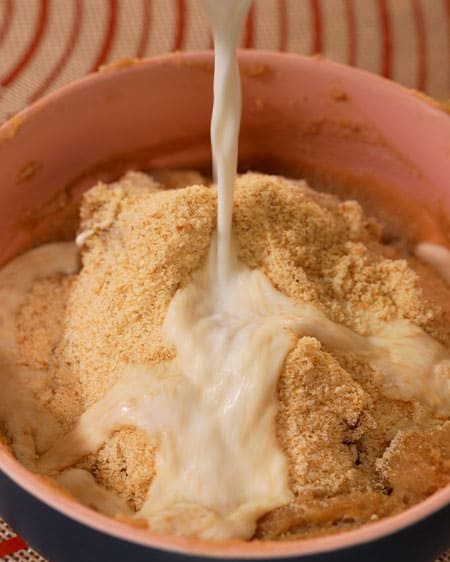
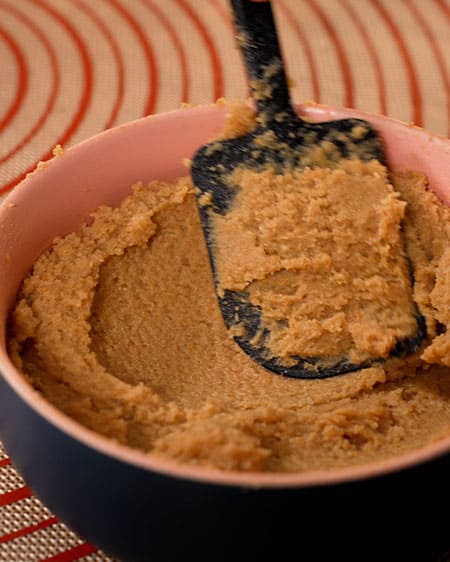
In a bowl, mix the sugar, softened butter, fine breadcrumbs, salt, and milk until it forms a paste-like consistency. Place it in a cool spot and let it chill.
Back to the Dough:
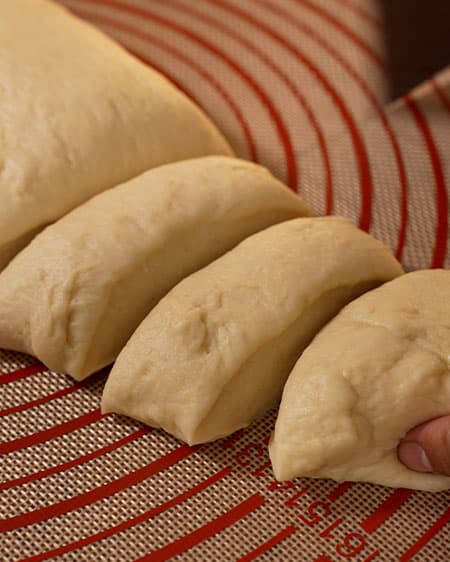
Divide the dough and shape it into small balls (70g for medium-sized rolls; 50g for smaller ones).
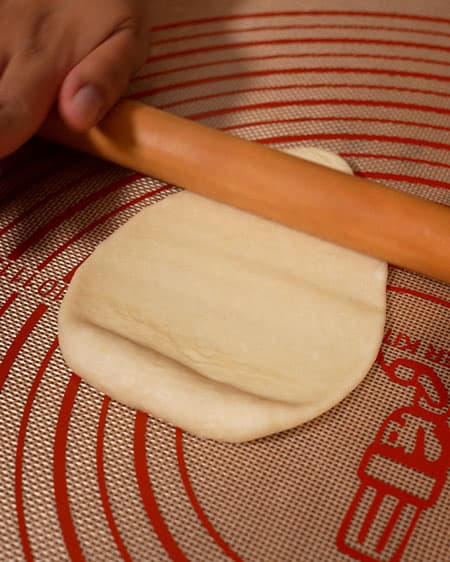
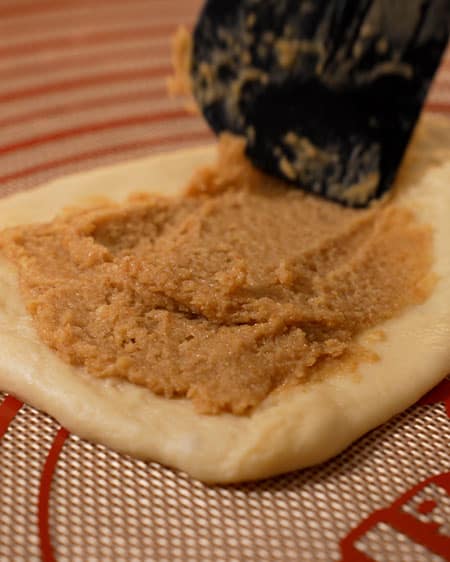
Flatten the dough into a triangle using a rolling pin. Add about 1 tbsp of the filling to the centre and spread it across the dough, making sure not to spread it all the way to the edges.
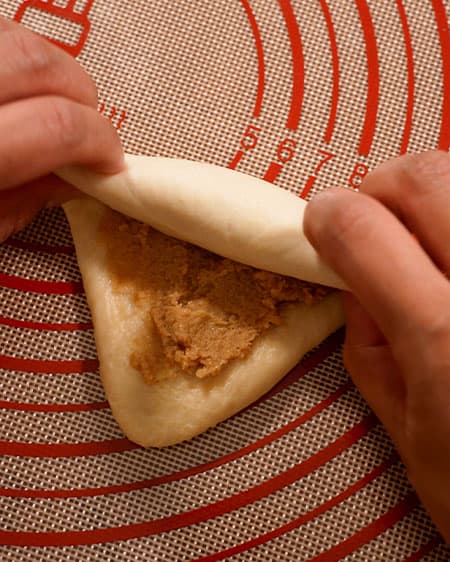
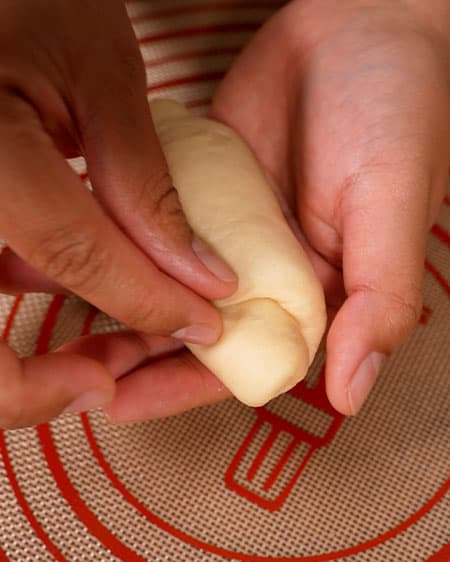
Gently roll the dough, starting from the widest side of the triangle. As you roll, make sure to pinch the sides to prevent the filling from spilling out. Once it’s fully rolled, gently press all the edges of the dough to make sure the filling is completely sealed inside.
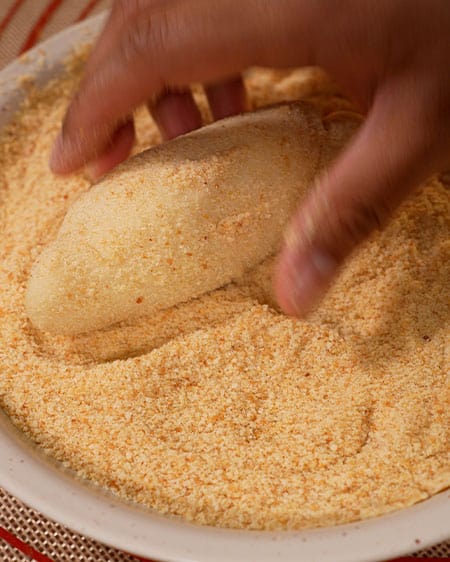
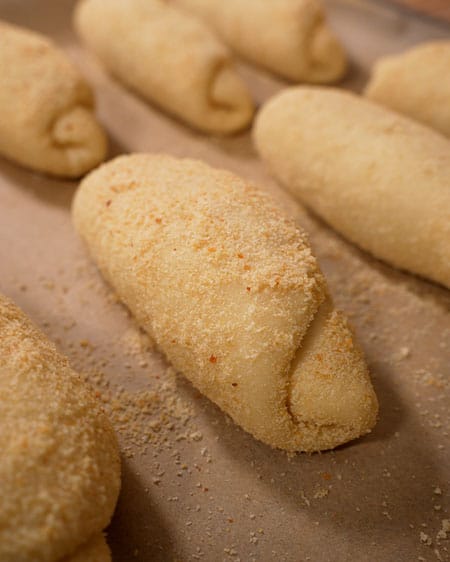
Coat them with breadcrumbs and let them rest for another hour.
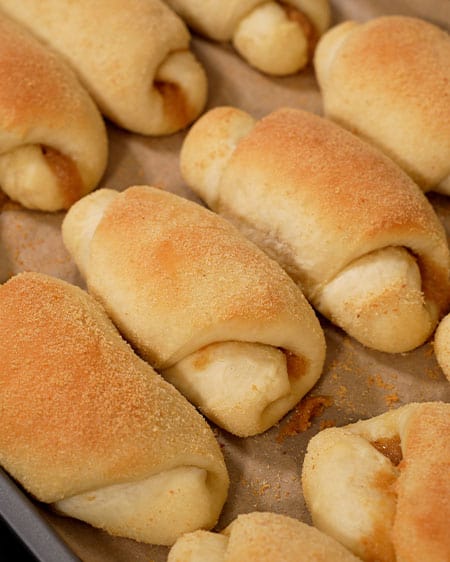
Bake at 350°F for 14–16 minutes, then enjoy!
Ingredients:
Instant Yeast
Used as a leavening agent for bread, instant yeast doesn’t need to be activated like active dry yeast. If you enjoy baking, I recommend investing in the kind that comes in a jar. it’s easier to store and more cost-effective in the long run!
Fine Breadcrumbs
Breadcrumbs are made by drying and toasting old bread, then grinding it into a fine, almost powder-like crumb. I both love and hate this because it makes every bite a little messy, but it gives pandesal that signature crumb that makes the experience complete.
All-Purpose Flour (APF)
My favourite flour for baking is all-purpose flour. It’s incredibly versatile and can be used for a wide range of recipes, as long as you know how to handle it. For example, avoid overmixing when making cakes to prevent too much gluten development, or knead dough thoroughly when making bread to build enough gluten. If you don’t want to invest in too many ingredients but still want to explore different types of baking, I’d recommend keeping all-purpose flour in your pantry. From there, you can experiment with other flours to see what you like best. 😄
Equipment:
*links below are affiliate links. If you buy through them, I may earn a small commission at no additional cost to you.


Spanish Bread Recipe (Soft Filipino Bakery Sweet Rolls)
Ingredients
- 3 ⅓ cups all-purpose flour (460g)
- 1/3 cup granulated sugar (75g)
- 1 tsp salt
- 1 cup whole milk lukewarm, around 50 secs in the microwave
- 1 pc egg room temp
- 2 tsp instant yeast (6g)
- 2 tbsp unsalted butter softened
Filling
- 1/2 cup breadcrumbs
- 2/3 cup brown sugar
- 1/2 cup softened butter
- 1/4 tsp salt
- 2 tbsp milk
Coating
- 1/2 cup breadcrumbs
Instructions
Dough
- In a bowl, combine the all-purpose flour, granulated sugar, salt, and instant yeast.
- Make a well in the centre of the dry ingredients and add the room-temperature egg and lukewarm milk.
- Mix everything together until a rough dough forms.
- Slice the softened unsalted butter into pieces and gently knead it into the dough.
- Knead the dough until the butter is fully incorporated and the dough feels bouncy. Using a mixer, this can take about 10 minutes at speed 3, while kneading by hand may take longer. I usually knead it for 20 minutes or more – an arm workout indeed, but trust me, it’s worth it!
- Put the dough in a greased bowl, cover it, and let it rest for 1 hour at room temperature. If you live in a cooler area, you can place the dough inside your oven (turned off!) with the oven light on to help it proof.
Making the Filling
- In a bowl, combine the softened butter, sugar, breadcrumbs, milk, and salt. Mix everything until it forms a paste.
Back to your Dough
- Punch the air out of the dough and gently knead it for 30 seconds. Divide the dough into small portions – 70 grams each for medium-sized rolls or 50 grams each for smaller ones – and gently shape each portion into a ball.
- Flatten the dough into a triangle about 1/2 cm thick and add about 1 tbsp of filling to the centre.
- Carefully spread the filling outward, making sure not to spread it all the way to the edges.
- Gently roll the dough, starting from the widest side of the triangle. As you roll, make sure to pinch the sides to prevent the filling from spilling out.
- Once it’s fully rolled, gently press all the edges of the dough to make sure the filling is completely sealed inside.
- Toss the dough in the fine breadcrumbs and make sure to completely coat the outside, similar to how you would with pandesal.
- Place the shaped dough onto a baking tray lined with parchment paper, leaving at least 1 inch of space between each piece. Cover and let them rest for another hour. We’re almost there, I promise!
- Start preheating your oven to 350°F. At this point, please don’t put your resting dough inside the oven!
- After the dough has finished resting, you’ll notice that it has grown slightly in size. Now, it’s time to bake!
- Bake the Spanish Bread on the middle rack for 14 to 16 minutes, or until the tops are lightly golden brown, and we’re done!
- Enjoy it for merienda, or honestly, any time of the day!

Kamusta?
I’m the hungry, and the curious Kat!
If food is a love language, then call me a linguist. I love experiencing life through food, and it’s something I enjoy sharing with others. I hope my recipes and stories inspire you to pick up that pan and start cooking – ’cause why not?
If you made my recipe, I would love to see it! Pleaseeee tag me, gurl!


